What Is Industrial IoT and How It Works
Industrial IoT connects machines, sensors, and software to boost efficiency. Learn what it is, how it works, and why factories are adopting it fast.
Industrial IoT is quietly reshaping how factories, power plants, and supply chains operate. Instead of relying on manual checks and gut instinct, companies now use networks of connected sensors and machines to see exactly what’s happening on the shop floor, in real time. This shift isn’t just a tech trend. It’s changing how equipment gets maintained, how production lines run, and how businesses make decisions.
If you’ve heard the term thrown around in meetings or trade publications but aren’t quite sure what it means in practice, you’re not alone. Industrial IoT, often shortened to IIoT, sits at the intersection of hardware, software, and data analytics. It takes machines that used to operate in isolation and connects them so they can talk to each other and to the people managing them.
In this article, we’ll break down what Industrial IoT actually is, how the technology works behind the scenes, the components that make it possible, and where it’s already delivering results. Whether you’re evaluating IIoT for your own operation or just trying to understand the buzz, this guide covers the fundamentals in plain language, without the jargon overload that usually comes with the topic.
What Is Industrial IoT (IIoT)?
Industrial IoT refers to the network of interconnected sensors, instruments, and devices used in industrial settings like manufacturing plants, oil and gas facilities, power grids, and logistics operations. These connected devices collect and share data, allowing companies to monitor equipment, automate processes, and improve efficiency without constant human oversight.
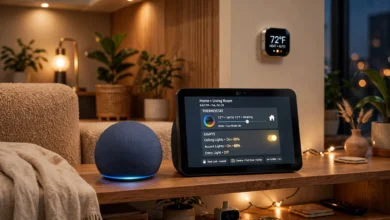
Think of it as the industrial cousin of the consumer smart home. Just as a smart thermostat learns your habits and adjusts itself, an IIoT-equipped machine can track its own performance, flag early signs of wear, and send that information straight to a technician’s dashboard before a breakdown even happens.
The term is closely tied to Industry 4.0, the broader movement toward digitizing manufacturing and industrial processes. While Industry 4.0 covers the whole philosophy of smart factories, Industrial IoT is the technical backbone that makes it possible. Without sensors feeding data and networks carrying that data somewhere useful, none of the automation or analytics that Industry 4.0 promises would work.
It’s worth noting that Industrial IoT isn’t a single product you buy off a shelf. It’s an ecosystem: hardware, connectivity, software, and analytics all working together toward a common goal, usually better uptime, lower costs, or safer operations.
How Industrial IoT Works
Understanding how Industrial IoT works is easier if you break it down into a sequence of steps. Data doesn’t just appear on a manager’s screen by magic. It travels through several stages before it becomes something useful.
1. Data Collection Through Sensors
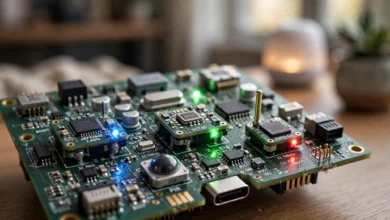
Everything starts with sensors attached to industrial equipment. These sensors measure things like temperature, vibration, pressure, humidity, or rotational speed. A single piece of machinery might have a dozen sensors monitoring different aspects of its performance at once.


For example, a sensor on a factory motor might track vibration levels. A sudden spike could indicate a bearing is wearing out, long before the motor actually fails.
2. Connectivity and Data Transmission
Once sensors gather data, that information needs to travel somewhere it can be processed. This is where connectivity comes in. Depending on the setup, data might move through:
- Wired industrial networks (Ethernet, fieldbus protocols)
- Wireless networks (Wi-Fi, cellular, or low-power wide-area networks like LoRaWAN)
- Bluetooth for short-range device communication
- 5G for facilities needing high-speed, low-latency transmission
The choice of connectivity depends on the environment. A remote oil pipeline might rely on cellular or satellite links, while a factory floor might use a dedicated wireless network built for industrial reliability.
3. Edge Computing and Local Processing
Not all data needs to travel to a distant server before it’s useful. Edge computing allows some processing to happen right at or near the device itself. This matters because sending every bit of raw sensor data to the cloud can be slow and expensive, especially when a decision needs to be made in milliseconds.
Edge devices can filter out noise, run basic calculations, and only send the meaningful data upstream. This reduces bandwidth use and speeds up response times for time-sensitive operations.
4. Cloud Storage and Data Processing
After local processing, relevant data typically moves to cloud platforms where it’s stored, organized, and combined with data from other machines or locations. This is where the bigger picture starts to form. A single sensor reading doesn’t tell you much, but thousands of readings across an entire facility, tracked over months, reveal patterns.
Cloud platforms also make it possible to access this data remotely, so a plant manager in one city can monitor equipment in a facility hundreds of miles away.
5. Data Analytics and Machine Learning
This is where raw numbers turn into actual insight. Analytics software, often powered by machine learning, looks for trends, anomalies, and correlations in the data. It might notice that machines running at a certain temperature for extended periods tend to fail within a predictable window, or that a specific combination of sensor readings usually precedes a quality defect.
Over time, these systems get better at predicting problems, which brings us to one of the most valuable applications of IIoT: predictive maintenance.
6. Action and Automation
The final step is turning insight into action. This might mean automatically adjusting a machine’s settings, sending an alert to a maintenance technician, or triggering a shutdown if a safety threshold is crossed. In more advanced setups, the system can act without human intervention at all, closing the loop from sensor to decision to action.
Key Components of an Industrial IoT System
To fully grasp how Industrial IoT works, it helps to look at the individual building blocks that make up a typical system.
Sensors and Actuators
Sensors gather data (temperature, pressure, motion), while actuators carry out physical actions based on instructions from the system, like opening a valve or adjusting a conveyor belt’s speed. Together, they form the physical layer of any IIoT deployment.
Connectivity Infrastructure
This includes routers, gateways, and network protocols that move data from devices to processing systems. Industrial environments often require ruggedized equipment that can handle extreme temperatures, dust, or vibration, unlike typical consumer-grade networking gear.
Cloud and Edge Platforms
These platforms handle data storage, processing, and analysis. Many companies use a hybrid approach: edge computing for immediate, time-sensitive decisions, and cloud computing for long-term storage and deeper analysis.
Analytics and Software Layer
This is the brains of the operation. Software platforms process incoming data, apply algorithms, generate dashboards, and produce the reports that decision-makers actually look at.
Cybersecurity Measures
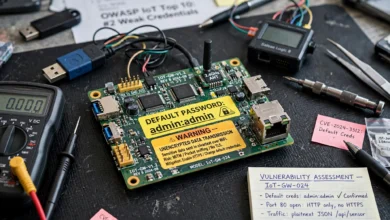
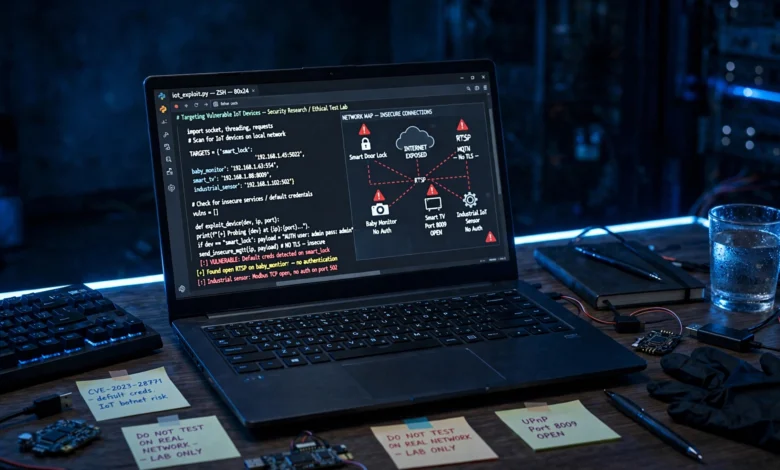
Connecting industrial equipment to networks introduces new vulnerabilities. A comprehensive IIoT setup needs firewalls, encryption, and access controls to prevent unauthorized access to critical systems. According to the National Institute of Standards and Technology, securing connected industrial systems requires a layered approach that addresses both IT and operational technology risks, since a breach in one area can quickly affect the other.
Industrial IoT vs. Consumer IoT
People often confuse Industrial IoT with the consumer version of IoT, like smart speakers or fitness trackers. While they share the same basic concept, connected devices sharing data, the two differ significantly in practice.
- Scale and complexity: Industrial deployments often involve thousands of sensors across large facilities, compared to a handful of devices in a home.
- Reliability requirements: A smart light bulb failing is an inconvenience. A sensor failure on a chemical processing line can be a safety hazard.
- Data volume: Industrial systems typically generate far more data, often requiring specialized infrastructure to handle it.
- Longevity: Industrial equipment is expected to last 10, 20, even 30 years, so IIoT solutions need to be built for long-term durability, not the two-to-three-year lifecycle typical of consumer gadgets.
- Environmental conditions: Industrial sensors often operate in extreme heat, cold, dust, or moisture, requiring more rugged hardware than consumer devices.
This distinction matters because it explains why industrial-grade IoT solutions cost more and take longer to deploy than their consumer counterparts. The stakes, and the environments, are simply different.
Benefits of Industrial IoT
Companies aren’t adopting Industrial IoT just because it’s trendy. There are concrete, measurable advantages driving adoption across industries.
Predictive Maintenance
Rather than fixing equipment after it breaks or servicing it on a fixed schedule regardless of actual condition, predictive maintenance uses real-time data to determine when a machine actually needs attention. This reduces unplanned downtime and extends equipment life.
Improved Operational Efficiency
Real-time visibility into production processes helps managers spot bottlenecks, adjust workflows, and eliminate waste. Small inefficiencies that used to go unnoticed become visible and fixable.
Enhanced Safety
Sensors can detect hazardous conditions, like gas leaks, excessive heat, or structural stress, before they become dangerous. This is particularly valuable in industries like mining, oil and gas, and chemical manufacturing.
Better Quality Control
By monitoring production conditions in real time, manufacturers can catch quality issues as they happen rather than discovering defects after a batch is complete.
Cost Reduction
Reduced downtime, better resource allocation, and fewer emergency repairs all add up to lower operational costs over time.
Remote Monitoring and Management
Managers and technicians can monitor equipment from anywhere, reducing the need for constant on-site presence and enabling faster response to issues.
Real-World Applications of Industrial IoT
Industrial IoT is already in use across a wide range of sectors. Here are some of the most common applications:
- Manufacturing: Tracking machine performance, automating quality checks, and optimizing production schedules.
- Energy and Utilities: Monitoring power grids, detecting equipment faults, and managing renewable energy sources like wind turbines and solar panels.
- Oil and Gas: Monitoring pipeline integrity, detecting leaks, and tracking equipment conditions in remote locations.
- Agriculture: Using soil sensors, weather stations, and automated irrigation systems to optimize crop yields.
- Logistics and Supply Chain: Tracking shipments in real time, monitoring warehouse conditions, and managing fleet performance.
- Healthcare Facilities: Monitoring critical equipment like HVAC and medical gas systems to ensure consistent operating conditions.
Each of these applications relies on the same basic principle: collecting data from connected devices and using it to make faster, smarter decisions.
Challenges of Implementing Industrial IoT
Adopting Industrial IoT isn’t without obstacles. Companies considering a transition should be aware of the following challenges.
High Initial Investment
Installing sensors, upgrading network infrastructure, and integrating software platforms requires significant upfront spending, which can be a barrier for smaller operations.
Integration With Legacy Systems
Many industrial facilities still run equipment that’s decades old and wasn’t designed to connect to modern networks. Retrofitting older machinery with sensors and connectivity can be complicated and costly.
Cybersecurity Risks
Connecting previously isolated industrial systems to networks creates new attack surfaces. A cyberattack on a connected industrial system can have physical consequences, not just data breaches. The Industrial Internet Consortium has published extensive guidance on securing these environments, noting that operational technology security requires different strategies than standard IT security due to the physical risks involved.
Data Overload
Collecting massive amounts of data is only useful if a company has the tools and expertise to analyze it properly. Without the right analytics capabilities, businesses can end up drowning in data without gaining meaningful insight.
Skills Gap
Implementing and maintaining IIoT systems requires a mix of skills, including networking, data science, and industrial engineering, that many organizations don’t currently have in-house.
The Future of Industrial IoT
Looking ahead, several trends are shaping where Industrial IoT is headed:
- Wider adoption of 5G will enable faster, more reliable connections for time-sensitive industrial applications.
- Increased use of artificial intelligence will make predictive analytics more accurate and reduce the amount of manual data interpretation required.
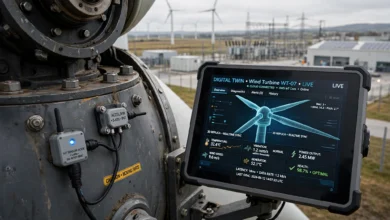
- Digital twins, virtual replicas of physical equipment, will let companies simulate and test changes before applying them to real machinery.
- Greater focus on interoperability will help different IIoT platforms and devices communicate more easily, reducing vendor lock-in.
- Stronger cybersecurity standards will become a bigger priority as more critical infrastructure gets connected.
As the technology matures and costs come down, it’s likely that smaller and mid-sized businesses, not just large industrial players, will start adopting IIoT solutions in greater numbers.
Conclusion
Industrial IoT has moved from a futuristic concept to a practical tool that’s already reshaping how factories, energy providers, and logistics companies operate. By connecting sensors, machines, and software into a single system, businesses gain the kind of real-time visibility that used to be impossible, catching problems before they become costly failures, streamlining operations, and making smarter decisions based on actual data rather than guesswork.
While the path to adoption comes with real challenges, from upfront costs to cybersecurity concerns, the long-term benefits of improved efficiency, safety, and cost savings are pushing more industries to invest in this technology. As connectivity improves and analytics tools become more accessible, Industrial IoT is likely to become less of a competitive advantage and more of a standard part of how industrial operations run.