What Are Digital Twins in IoT?
Digital twins in IoT let you monitor, simulate, and optimize physical assets in real time. Here's how the technology actually works.
If you’ve spent any time around industrial IoT, smart manufacturing, or connected-city projects, you’ve probably run into the term digital twin more than once. It gets thrown around a lot, sometimes as a buzzword, sometimes as a genuinely game-changing piece of engineering. So what is it, really?
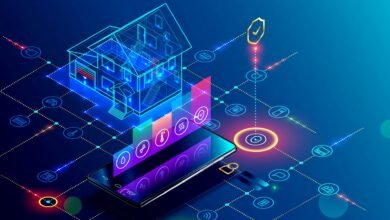
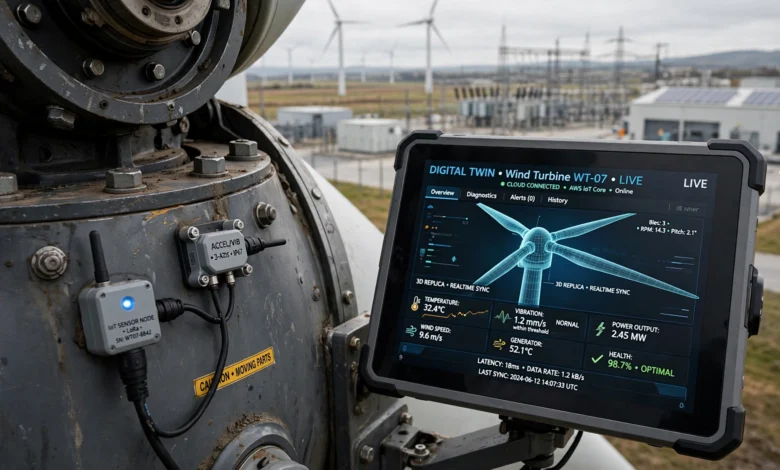
At its core, a digital twin in IoT is a live, data-driven virtual copy of a physical object, machine, or process. Sensors on the real-world asset feed a constant stream of data into a software model, and that model updates itself in near real time to mirror what’s actually happening on the factory floor, inside the engine, or across a city grid. It’s not a static 3D drawing. It’s a working replica that reacts, predicts, and helps people make better decisions before problems show up in the physical world.
Companies like Tesla, Siemens, and Rolls-Royce have already built entire maintenance and design strategies around this idea. Manufacturers use it to catch equipment failures before they happen. City planners use it to model traffic and energy use. Hospitals are starting to use it to personalize patient care.
In this article, we’ll break down what digital twins in IoT actually are, how they work, the different types you’ll come across, real industry use cases, the benefits, the challenges, and where this technology is headed next.
What Are Digital Twins in IoT?
Digital twins in IoT are virtual representations of physical entities that stay synchronized with their real-world counterparts through continuous data exchange. The “twin” part isn’t a metaphor. It’s meant to behave like a genuine counterpart to the physical object, built from live sensor data rather than a one-time snapshot.
Here’s the simplest way to think about it: a digital twin has three connected pieces.
- The physical object — the actual machine, vehicle, building, or process operating in the real world.
- The digital model — a software representation that mirrors the object’s structure, behavior, and current state.
- The data connection — the constant flow of information between the two, usually powered by IoT sensors, edge devices, and cloud or edge computing platforms.
Without that third piece, you just have a 3D model or a CAD drawing. What makes it a true digital twin is the ongoing, two-way link to real-world data. As IBM’s overview of the technology notes, that real-time exchange is what allows the simulated conditions to accurately reflect what’s happening in the physical world, rather than a guess based on outdated assumptions. You can read more detail in IBM’s explainer on digital twin technology.
Digital twin IoT systems aren’t new in concept. NASA and the U.S. Air Force were experimenting with early versions of the idea back in the early 2000s for spacecraft and aircraft monitoring. What’s changed is the cost and availability of the sensors, bandwidth, and cloud infrastructure needed to make it practical at scale. That’s exactly why the technology has moved from aerospace labs into everyday manufacturing plants, hospitals, and city governments.
How Digital Twins Work in IoT
Understanding how a digital twin actually functions helps explain why it’s so useful. It’s less about fancy visuals and more about a tight feedback loop between hardware and software.

1. Data Collection Through IoT Sensors
Everything starts with sensors attached to the physical asset. These could be temperature gauges, vibration sensors, pressure monitors, GPS trackers, or cameras. This is where IoT devices do their job: continuously capturing data points like usage patterns, wear and tear, environmental conditions, or output quality.
2. Data Transmission and Processing
That raw sensor data has to get somewhere useful. It’s typically sent through wireless networks to an edge device or cloud platform, where it’s cleaned, structured, and prepared for the digital model to consume. Some setups process data at the edge first to reduce latency, especially in situations where a delayed response could mean a safety issue or a costly shutdown.
3. The Virtual Model
This is the “twin” itself: a software representation built using engineering data, historical performance records, and physics-based or machine learning models. As new sensor data arrives, the model updates to reflect the asset’s current condition rather than a fixed, outdated state.
4. Simulation and Analysis
Once the model is synchronized with live data, it can be used to run simulations. Engineers can test “what if” scenarios, like increasing production speed or exposing equipment to extreme temperatures, without touching the actual machine. This is one of the biggest advantages over traditional monitoring dashboards, which mostly just show you what’s happening right now rather than what might happen next.
5. Feedback to the Physical System
In more advanced setups, insights from the digital twin loop back into the physical system automatically. This could mean adjusting a machine’s settings, triggering a maintenance alert, or optimizing an energy grid’s load distribution in real time.
Types of Digital Twins in IoT
Not every digital twin operates at the same scale. Depending on what’s being modeled, digital twins generally fall into four categories.
- Component twins — Model a single part, like a bearing, valve, or sensor. These are the building blocks of larger twin systems.
- Asset twins — Represent a complete piece of equipment, such as a wind turbine, pump, or vehicle, made up of multiple interacting components.
- System twins — Model how multiple assets work together, such as an entire production line or a fleet of connected vehicles.
- Process twins — Capture how systems interact across an entire operation, like a full manufacturing workflow or a city’s traffic management network.
As the scope widens from component to process, the complexity and the potential payoff both grow. A component twin might help you predict when a single part needs replacing. A process twin can reshape how an entire facility runs.
Key Benefits of Digital Twins in IoT
So why are so many industries investing in this technology? A few clear benefits keep showing up across case studies and industry research.
- Real-time visibility — Instead of waiting for scheduled inspections or relying on incomplete reports, teams get a continuous, accurate view of how an asset or process is performing right now.
- Predictive maintenance — By tracking wear patterns and performance trends, digital twins can flag potential failures before they cause downtime, which is often far cheaper than reactive repairs.
- Faster, safer testing — Engineers can simulate new configurations, stress conditions, or design changes virtually, cutting the cost and risk of physical prototyping.
- Better decision-making — With accurate, live data feeding the model, managers and engineers can make informed calls instead of relying on guesswork or outdated reports.
- Improved energy efficiency — Digital twins can model energy consumption patterns and suggest adjustments, which matters a lot for facilities trying to cut costs and meet sustainability targets.
- Shorter product development cycles — Testing designs virtually, rather than building physical prototypes at every stage, speeds up the path from concept to finished product.
- Stronger return on investment — According to a 2025 industry survey referenced by IBM, a large majority of companies that deploy digital twins report meaningful returns, with many seeing 20% ROI or higher.
These benefits explain why this isn’t just a niche engineering concept anymore. It’s becoming a standard part of how modern industrial IoT operations are run.
Real-World Applications of Digital Twins in IoT
Theory is one thing, but the practical use cases are where this technology really proves itself. Here’s how different industries are putting IoT digital twins to work.
Manufacturing
Manufacturing is arguably where digital twins have matured the fastest. Production line sensors and quality control systems feed data into twins that track everything from machine health to product defects. This lets manufacturers catch quality issues early, reduce waste, and fine-tune throughput without halting operations to test changes.
Automotive
Car makers use digital twins for both design and post-sale support. Tesla is a well-known example, building an individual digital twin for every vehicle it produces using battery monitoring sensors, energy consumption meters, and performance tracking devices. This supports predictive maintenance and enables over-the-air software updates tailored to each car’s actual condition, as detailed in TechTarget’s overview of IoT and digital twins.
Aerospace
Aerospace companies rely on digital twins for both performance monitoring and preventive maintenance. Rolls-Royce, for instance, has built its “Blue Data Thread” initiative around this exact concept, using engine sensor data to anticipate maintenance needs before a fault ever grounds a plane.
Healthcare
Hospitals and medical device makers are experimenting with digital twins of individual patients, organs, or even hospital workflows. The goal is to personalize treatment plans and better predict how a patient might respond to a given intervention, based on their specific physiological data.
Smart Cities
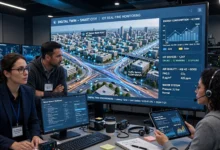
City planners have started building digital twins of entire urban areas. Virtual Singapore is a well-known example, using IoT data to model traffic flow, energy usage, and infrastructure planning at a citywide scale. It’s a good illustration of how far the process-twin category can be pushed.
Energy and Utilities
Power grid operators use digital twins to balance load distribution, predict equipment failures in substations, and integrate renewable energy sources more smoothly into existing infrastructure.
Digital Twins vs. Traditional IoT Monitoring
It’s worth being clear about how this differs from a standard IoT dashboard, since the two get confused fairly often.
- Traditional monitoring shows you current readings: temperature, pressure, status codes. It’s useful, but mostly reactive.
- Digital twins go a step further by simulating outcomes. They don’t just tell you what’s happening, they help predict what’s likely to happen next and let you test different responses before committing to one.
Put simply, a dashboard tells you the story so far. A digital twin helps you write the next chapter before it happens.
Challenges of Implementing Digital Twins in IoT
None of this comes without hurdles, and it’s worth being upfront about them.
- Data quality and integration — Digital twins are only as good as the data feeding them. Inconsistent sensor readings or gaps in connectivity can throw off the entire model.
- Cost of infrastructure — Sensors, edge computing hardware, and cloud platforms all add up, especially for smaller organizations trying to get started.
- Scalability — Modeling a single machine is manageable. Scaling that up to an entire facility or city requires significantly more computing power and coordination.
- Security and privacy — A digital twin that mirrors sensitive operational or personal data becomes a target worth protecting carefully, since a breach could expose both the virtual model and the physical system it represents.
- Skills gap — Building and maintaining accurate models requires a mix of engineering, data science, and IoT expertise that not every organization has in-house yet.
These are real obstacles, but they’re also the reason interest in this space keeps growing. Vendors are actively working on better integration tools, lower-cost sensors, and more accessible platforms to bring digital twin technology within reach of mid-sized companies, not just large enterprises.
The Future of Digital Twins in IoT
Looking ahead, a few trends are shaping where this technology is headed next.
- AI-powered twins — Machine learning is increasingly being layered onto digital twins, allowing them to not just simulate scenarios but actually recommend or automate responses.
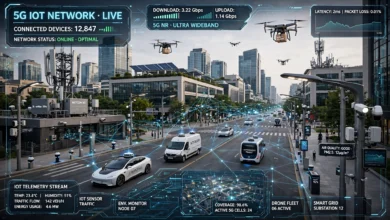
- 5G and edge computing — Faster, lower-latency networks make it possible to run more sophisticated twins with near-instant feedback loops, which matters a lot for time-sensitive industries like manufacturing and energy.
- Interconnected twins — Rather than isolated models, organizations are starting to connect multiple digital twins together, allowing a twin of a single machine to feed into a twin of an entire factory, and eventually an entire supply chain.
- Wider adoption beyond heavy industry — Retail, agriculture, and even personal health tracking are starting to adopt simplified versions of this technology, extending it well past its industrial roots.
The direction is fairly clear: digital twins are moving from a specialized tool used by aerospace and manufacturing giants to a more mainstream part of how connected systems are managed across almost every sector.
Conclusion
Digital twins in IoT represent one of the more practical, results-driven applications of connected technology available today. By pairing continuous sensor data with a living virtual model, organizations get more than a snapshot of current conditions. They get a tool for predicting problems, testing changes safely, and making smarter decisions across manufacturing, automotive, aerospace, healthcare, energy, and smart city projects.
The technology still comes with real challenges around data quality, cost, and security, but the direction of travel is unmistakable: as sensors get cheaper and AI models get sharper, digital twins are set to become a standard part of how physical and digital systems stay in sync.