Best Voice Assistants for Smart Homes Compared
Best Voice Assistants for Smart Homes compared for 2026 — Alexa+, Google Gemini, and Siri reviewed on compatibility, privacy, and price.
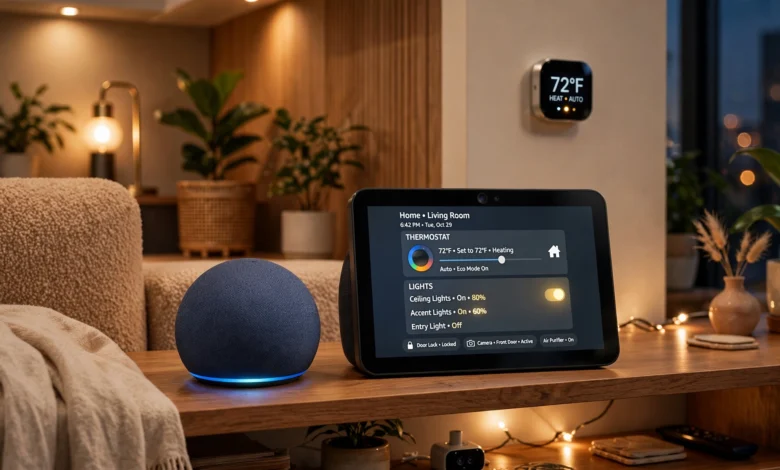
Best Voice Assistants for Smart Homes decisions used to be simple: you picked whatever came with your phone and called it a day. That’s not true anymore. In 2026, the assistant you choose now decides how your lights turn on, how your thermostat learns your schedule, and how much of your daily life gets sent to a company’s servers. Amazon rebuilt Alexa from the ground up into Alexa+. Google folded its old assistant into Gemini. Apple, after years of a sleepy Siri, struck a deal with Google to power Siri’s brain with Gemini models. Each of these moves changed what a smart home voice assistant can actually do for you.
This guide breaks down the best voice assistants for smart homes based on real differences that matter: how many devices each one talks to, how well it answers questions, what it costs, and how much privacy you’re trading away. Whether you’re setting up your first smart speaker or thinking about switching ecosystems, you’ll find a clear answer here rather than marketing language. We’ll cover Amazon Alexa+, Google Gemini for Home, Apple Siri with HomeKit, Samsung SmartThings, and a few smaller platforms worth knowing about, then walk through how to pick the right one for your specific home and habits.
What Makes a Voice Assistant Right for Your Smart Home
Before comparing brands, it helps to know what actually separates a good voice assistant for smart homes from a mediocre one. Four things matter most:
- Device compatibility — how many smart plugs, bulbs, locks, and thermostats it can actually control
- Response accuracy — whether it understands what you’re asking the first time, without repeating yourself
- Privacy practices — how much of your voice data is stored, and whether processing happens on-device or in the cloud
- Price and hardware lock-in — whether you need to buy a specific brand of speaker or display to get full functionality
No single assistant wins every category. That’s the honest starting point for this comparison, and it’s why the “best” choice really depends on what devices you already own.
1. Amazon Alexa+ — The Compatibility Champion
Amazon spent over a decade building out Alexa’s device support, and it shows. Amazon Alexa works with more than 140,000 compatible devices, making it compatible with nearly every smart light, switch, thermostat, and lock on the market. If you’ve been buying smart home gadgets for years from a mix of brands, there’s a very good chance Alexa already talks to most of them.
In 2025, Amazon rolled out Alexa+, a complete rebuild of the assistant using generative AI. Alexa+ launched to all U.S. users in February 2026 with generative AI, agentic capabilities, and integrations with services like Uber, Ticketmaster, and OpenTable. That means Alexa can now handle multi-step requests, book things on your behalf, and hold a more natural conversation instead of responding to rigid commands.
Pricing: Alexa+ is free for Amazon Prime members, or $19.99 per month for everyone else.
Best for:
- Households with a large, mixed collection of smart home brands
- Anyone who wants the widest device compatibility without checking every gadget’s box first
- Prime members who want the AI upgrade at no extra cost
Where it falls short: Alexa’s answer accuracy on general knowledge questions still lags behind Google. In one independent test, Alexa answered idiomatic and follow-up questions correctly 75% of the time, a respectable score but not the leader.


2. Google Gemini for Home — The Smartest Conversationalist
Google retired the old Google Assistant name in favor of Gemini, and the upgrade is more than cosmetic. Gemini runs natively on the new Google Home Speaker, the Pixel 10 series, and all Nest Hub displays, and it noticeably outperforms rivals on understanding complex, multi-part questions.
Independent testing backs this up. Google Assistant answers questions correctly 92% of the time, still the smartest voice assistant for factual queries and follow-up conversations. Another review found similar results: with 94% accuracy on factual questions and strong contextual follow-up handling, Google Assistant is the best voice-based research tool, able to track pronouns and context across a conversation the way a person would.
Gemini’s home device compatibility is smaller than Alexa’s but still substantial. Google Assistant works with roughly 50,000 compatible devices, and it integrates deeply with anything you already run through Google — Calendar, Gmail, Maps, and YouTube.
Pricing: Google Assistant is free on Android phones, Nest speakers ($29.99–$229.99), and Nest displays, while Google One AI Premium at $19.99 per month adds deeper Gemini features like email analysis and document summarization.
Best for:
- Android users and anyone deep in the Google ecosystem
- People who ask a lot of research-style or multi-turn questions
- Households with Nest thermostats, cameras, or Chromecast devices already installed
Where it falls short: Fewer supported smart home devices than Alexa, and some older Nest hardware is being phased toward the new Gemini branding, which can cause a short adjustment period for existing users.
3. Apple Siri with HomeKit — Built for Privacy
Siri has historically trailed both Alexa and Google Assistant on raw intelligence, but Apple’s approach to privacy and its recent AI overhaul are changing the conversation. In a notable shift, Apple added Gemini-powered Siri as an optional backend, marking the first time a rival AI model has powered Siri’s responses.
Even before this upgrade, Siri improved meaningfully. Siri scored 78% on independent accuracy testing, a genuine improvement from earlier versions of Apple Intelligence. Where Apple still leads is data handling: on-device processing, anonymized identifiers, and transparent data policies make Siri the best mainstream option for privacy-conscious households.
The tradeoff is device compatibility. HomeKit’s ecosystem has traditionally been the smallest of the big three. Apple HomeKit supports around 1,000-plus devices, with the Matter protocol closing the gap over time. If you own an iPhone and a HomePod, the experience feels tightly integrated. If you’re mixing in off-brand gadgets, you may find fewer of them officially supported.
Best for:
- Privacy-focused households
- iPhone, HomePod, and Apple TV owners who want a consistent ecosystem
- Users who rely heavily on Shortcuts for custom automation, which remains more flexible than Alexa’s or Google’s routine builders
Where it falls short: Smallest raw device count of the major platforms, and Apple has historically been slower to add third-party integrations.
4. Samsung SmartThings and Bixby — The Hub Builder’s Choice
Samsung takes a different approach than Amazon, Google, or Apple. Rather than leading with a conversational assistant, SmartThings functions primarily as a smart home hub that happens to support voice control through Bixby, Alexa, or Google. If you own a lot of Samsung appliances — a smart fridge, washer, or SmartThings-compatible TV — this ecosystem ties them together more cleanly than any competitor.
Best for:
- Households already invested in Samsung appliances and TVs
- Users who want a dedicated smart home hub rather than a general-purpose AI assistant
Where it falls short: Bixby’s conversational ability remains behind Alexa+, Gemini, and Siri, so most SmartThings users end up pairing the hub with Alexa or Google for voice commands anyway.
5. Home Assistant — For the Privacy Maximalist and Tinkerer
If none of the big commercial platforms sit right with you, Home Assistant is worth knowing about. It’s an open-source home automation platform you can run entirely on local hardware, with no cloud dependency required. It won’t answer trivia questions as smoothly as Gemini, but it gives you full control over your data and supports an enormous range of devices through community-built integrations.
Best for:
- Privacy purists who don’t want any voice data leaving the house
- Hobbyists comfortable with some technical setup
Best Voice Assistants for Smart Homes by Use Case
Rather than picking one “winner,” it’s more useful to match the assistant to your situation.
Best for Overall Device Compatibility: Amazon Alexa+
If you’re building a smart home from scratch or already own a wide mix of brands, Alexa’s 140,000+ device support makes it the safest bet.
Best for Smart Answers and Research: Google Gemini
For anyone who talks to their assistant like a search engine — asking follow-up questions, requesting summaries, or digging into a topic — Google’s 92% accuracy rate on complex questions is hard to beat.
Best for Privacy: Apple Siri
On-device processing and transparent data policies make Siri the clear choice if keeping your voice data off distant servers matters more to you than raw device count.
Best Budget Option: Amazon Echo Dot
The Amazon Echo Dot at around $50 delivers the most value for smart home control on a budget, especially compared to Apple’s HomePod mini, which costs roughly double for a smaller device catalog.
Best for Apple Households: Siri + HomeKit
If your phone, laptop, and TV are all Apple, the automation options through Shortcuts and the consistency across devices outweigh the smaller device count for most users.
How to Choose the Best Voice Assistant for Your Smart Home
Here’s a practical way to narrow it down.
Step 1: Audit What You Already Own
Check the compatibility list for each assistant against your current smart plugs, bulbs, locks, and thermostats. It rarely makes sense to switch ecosystems just for a marginally smarter assistant if it means replacing hardware you already paid for.
Step 2: Decide How Much You Value Privacy
If you’re uncomfortable with cloud-based voice processing, Siri or Home Assistant will suit you better than Alexa+ or Gemini, both of which lean more heavily on cloud AI to power their smarter features.
Step 3: Think About Your Phone
Your smart home voice assistant choice is heavily influenced by whether you carry an iPhone or an Android device. Fighting your phone’s default ecosystem usually creates more friction than it’s worth.
Step 4: Factor In the Subscription Cost
Both Alexa+ and Google’s premium Gemini features now carry monthly subscription pricing, generally around $20 a month, though Alexa+ is free with Prime. Apple has not introduced a subscription for Siri, though that could change as Apple Intelligence expands.
Matter and the Future of Voice Assistants
One development is quietly making the “which ecosystem should I pick” question less painful: Matter, a smart home connectivity standard backed by Amazon, Google, Apple, Samsung, and hundreds of other manufacturers. A Matter-certified device can generally work across Alexa, Google Home, and Apple Home without separate setups for each. You can review the full list of supported device categories and the latest specification updates directly from the Connectivity Standards Alliance, the organization that maintains the standard.
As more manufacturers adopt Matter, the practical difference between “Alexa-only” and “Google-only” devices continues to shrink. That said, the assistants themselves — how they answer questions, handle routines, and manage your data — still vary widely, which is why the comparisons above matter more than raw device counts alone.
For a deeper look at how Apple structures device permissions and automation inside its own ecosystem, Apple’s Home app support page is a useful reference if you’re leaning toward HomeKit.
Frequently Asked Questions
Can I use more than one voice assistant in the same home? Yes. Many households run Alexa for smart home control and Siri or Gemini on their phones. Matter-certified devices make this easier since they don’t require separate hubs for each platform.
Which assistant is best for someone with no smart home devices yet? Start with whichever ecosystem matches your phone. iPhone owners get the smoothest setup with Siri and HomeKit; Android owners generally get more out of Gemini.
Do I need a smart speaker to use these assistants? No. All three major assistants work through phone apps and displays as well as dedicated speakers, though a speaker does make hands-free control noticeably more convenient.
Is Alexa+ worth paying for if I’m not a Prime member? If you rely heavily on voice-activated bookings, reminders, and multi-step tasks, the $19.99 monthly fee can be worth it. Casual users who just want to control lights and check the weather may not need the upgrade.
Conclusion
There isn’t a single best voice assistant for every smart home, and that’s really the point of this comparison. Amazon Alexa+ wins on sheer device compatibility and is the safest pick if you already own a mix of smart home brands. Google Gemini leads on conversational intelligence and question-answering, making it the strongest choice for research-minded users deep in the Google ecosystem. Apple Siri, especially with its new Gemini-powered backend, offers the best balance of privacy and a smaller but tightly integrated device catalog for iPhone households.
Samsung SmartThings and Home Assistant serve more specific needs, from appliance-heavy homes to privacy purists who want full local control. The right answer comes down to the phone in your pocket, the devices already in your walls, and how much you’re willing to trade convenience for privacy — not which brand shouts the loudest.