IoT in Retail: 7 Powerful Ways It’s Transforming Shopping in 2026
IoT in retail is changing how stores track stock, greet customers, and cut waste. Here's what's actually working in 2026 and why.
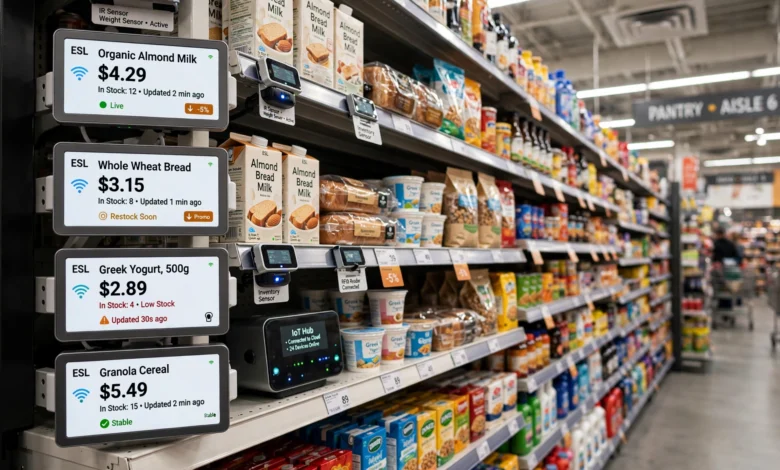
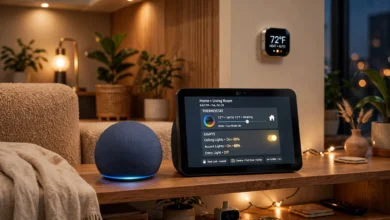
IoT in retail has moved past the buzzword stage. Walk into almost any large chain store today and you’re interacting with connected technology whether you notice it or not — a shelf sensor flagging a low-stock item, a camera counting foot traffic, a smart cooler adjusting its own temperature. None of this is experimental anymore. It’s infrastructure.
The numbers back this up. Market researchers at Fortune Business Insights peg the global IoT in retail market at $66 billion in 2024, with projections crossing $230 billion by 2032. That’s not a niche trend — that’s a fundamental rewiring of how stores operate, from the back-room stockroom to the checkout counter to the delivery truck outside.
But here’s the thing most articles on this topic get wrong: they list technologies without explaining why any of it matters to a retailer trying to keep the lights on and margins healthy. This piece is different. We’ll walk through the real applications of retail IoT happening right now, what they cost retailers who ignore them, and where this is all heading over the next few years. If you run a store, manage a supply chain, or just want to understand why your local grocery store suddenly knows exactly when the milk is about to expire, this is for you.
What Is IoT in Retail, Exactly?
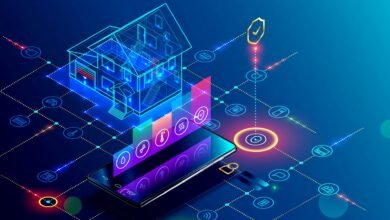
Before going further, it’s worth being precise about the term. The Internet of Things (IoT) in retail refers to a network of physical devices — sensors, RFID tags, cameras, beacons, connected point-of-sale systems — that collect data and share it over the internet or a local network. That data then feeds into software that helps retailers make faster, better-informed decisions.
Think of it as giving a store a nervous system. A traditional store only “knows” what’s happening when a human checks. A smart retail store knows continuously: which shelf is empty, which customer just walked in, which refrigerator is running warm, which delivery truck is ten minutes out. That constant flow of information is the whole point.
The Core Building Blocks
A few technologies show up again and again in retail IoT deployments:
- RFID tags and readers — track individual items without needing a direct line of sight, unlike barcodes
- Sensors — measure temperature, humidity, weight, or motion on shelves and in storage
- Beacons — short-range Bluetooth devices that trigger location-based notifications
- Smart cameras and computer vision — count people, monitor queues, and detect out-of-stock shelves
- Connected POS systems — link sales data directly to inventory and supply chain platforms
None of these are new inventions. What’s changed is the cost of deploying them at scale and the maturity of the software that turns raw sensor data into something a store manager can actually act on.
1. Smarter Inventory Management
Inventory has always been retail’s most stubborn headache. Count too little stock and you lose sales. Count too much and you’re sitting on capital that isn’t moving. IoT attacks this problem directly by giving retailers a near-real-time view of what’s actually on the shelf, not what a spreadsheet says should be there.
RFID-based inventory management is the clearest example. Instead of manual counts that take hours and are outdated the moment they’re finished, RFID readers can scan an entire stockroom in minutes. One documented case study from RFID Journal found that a group of large fashion retailers using always-on RFID pushed inventory accuracy up from a previous range of 60 to 80 percent toward near-complete visibility, cutting shrink and stockouts along the way. Separately, industry data compiled by SupplyMint suggests retailers deploying RFID typically see a 25 to 30 percent improvement in shelf availability, alongside stock accuracy approaching 99 percent.

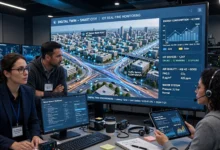
That level of accuracy sounds like a nice-to-have until you consider what “inventory distortion” actually costs. Every misplaced item, every phantom stockout, every overstocked SKU eats into margin. IoT doesn’t eliminate the problem, but it shrinks it to a fraction of what it used to be.
Smart Shelves and Automated Restocking
Smart shelves take this a step further by weighing products or reading RFID tags continuously, then flagging staff — or triggering an automatic reorder — the moment stock drops below a threshold. Academic research published in the Journal of Umm Al-Qura University tested a smart shelf system combining IoT with machine learning and reported 99.35 percent accuracy in identifying which products needed restocking, with alerts issued in under nine seconds on average. That’s the kind of responsiveness a human stock clerk simply can’t match across an entire store floor.
2. Personalized and Frictionless Customer Experiences
Retailers have chased “personalization” for decades through loyalty cards and email lists. IoT makes it far more immediate. Beacons placed throughout a store can detect when a shopper’s phone is nearby and push a relevant offer for the exact aisle they’re standing in. Smart mirrors in fitting rooms let shoppers request a different size without leaving the room. Connected carts can guide customers along a personalized route based on their shopping list.
This isn’t just a gimmick for tech-forward flagship stores. It changes conversion behavior in measurable ways:
- Reduced friction at checkout through self-scanning carts and computer-vision-based “just walk out” systems
- Real-time offers delivered based on actual in-store location, not guesswork
- Faster service when staff receive alerts about a customer who’s been waiting or searching for help
- Better fitting-room and trial experiences through connected mirrors and inventory look-ups
The common thread is that IoT retail technology removes small annoyances that used to push customers toward abandoning a purchase, whether that’s a long line, an empty shelf, or a size that isn’t in stock.
3. Supply Chain Visibility From Warehouse to Shelf
Retail doesn’t start at the storefront. It starts in a warehouse, moves through a distribution network, and only then reaches the shelf. IoT sensors attached to pallets, containers, and delivery vehicles now track location, temperature, and handling conditions the entire way.
This matters enormously for anything perishable. A connected cold chain means a retailer knows immediately if a truck’s refrigeration unit fails, rather than discovering spoiled inventory after it’s already on the shelf. It also matters for high-value goods, where GPS-tagged shipments reduce theft and give retailers an accurate estimated arrival time instead of a rough guess.
Why This Reduces Waste
Grocery retail, in particular, has embraced IoT-driven freshness monitoring. Sensors track humidity and temperature in storage and transit, then feed that data into dynamic pricing systems that discount items before they spoil rather than after. Industry estimates cited by retail technology publications suggest this kind of monitoring can meaningfully cut food waste and the losses that come with it, simply by giving retailers a few extra hours or days of warning.
4. In-Store Analytics and Foot Traffic Intelligence
One of the quieter but more valuable uses of IoT in the retail industry is understanding how people actually move through a physical store. Sensors and computer vision systems can count foot traffic, map which aisles get the most attention, and identify “dead zones” where customers rarely linger.
A documented deployment by small retailers in Spain used AI-powered people-counting sensors over LoRaWAN networks and reportedly gave store owners the ability to optimize layouts, staffing levels, and marketing strategy based on precise footfall data rather than intuition. That’s a meaningful shift — retail layout decisions that used to rely on a manager’s gut feeling can now be tested and measured like any other business metric.
This data typically feeds three decisions:
- Store layout — repositioning high-margin or promotional products into verified high-traffic zones
- Staffing schedules — aligning shift coverage with actual, not assumed, peak hours
- Marketing spend — measuring whether in-store promotions actually change customer dwell time and purchase behavior
5. Loss Prevention and Shrinkage Reduction
Shrinkage — inventory lost to theft, error, or damage — remains one of retail’s most persistent costs. RFID tags that trigger an alert when merchandise exits a store without being scanned at checkout are now common in categories like apparel and electronics, where shrinkage rates have historically run high.
Beyond theft, connected sensors also catch a subtler form of loss: administrative and process errors, like mis-shipped inventory or products logged incorrectly during receiving. Because RFID and IoT sensors capture data automatically, they remove much of the human error that barcode-only systems depend on humans to avoid.
6. Predictive Maintenance for Retail Equipment
It’s easy to focus on customer-facing IoT and forget the equipment that keeps a store running: refrigeration units, HVAC systems, self-checkout kiosks, and point-of-sale hardware. Sensors on this equipment can detect early signs of failure — a compressor running slightly hotter than normal, a kiosk’s payment reader throwing more errors than usual — and flag it before a full breakdown happens.
For a grocery chain, an unplanned refrigeration failure isn’t just a repair bill. It’s the entire contents of that unit going in the trash. Predictive maintenance powered by IoT sensors turns an unplanned, expensive emergency into a scheduled, cheaper fix.
7. Sustainability and Energy Management
Retailers are under growing pressure — from regulators, investors, and customers alike — to show measurable progress on sustainability. IoT gives them a practical way to do that instead of just publishing a pledge.
Connected building systems can automatically adjust lighting, heating, and cooling based on real occupancy rather than a fixed schedule, cutting energy waste in stores that sit half-empty for large parts of the day. Smart refrigeration monitoring, as mentioned earlier, reduces food waste by catching temperature drift before products spoil. Even packaging is getting connected, with IoT-enabled tracking increasingly used to verify a product’s carbon footprint and supply chain origin for customers who care about that information.
The Market Numbers Behind the Trend
It helps to step back and look at how fast this space is actually growing, because the figures vary depending on which segment of “retail IoT” a report is measuring — hardware, software, or the full market including services.
| Source | Market Estimate | Timeframe |
|---|---|---|
| Fortune Business Insights | $66B (2024) → $230B+ | By 2032 |
| Global Growth Insights | $78.77B (2026) → $630B | By 2035, ~26% CAGR |
| The Business Research Company | $55.26B (2026) → $107.58B | By 2030 |
Whichever set of figures you trust most, the direction is identical: steep, sustained growth, with no sign of plateauing. Grand View Research separately projects the broader smart retail category to grow at over 29 percent annually through 2030, driven largely by inventory, supply chain, and customer engagement use cases.
Challenges Retailers Still Need to Solve
None of this is a free lunch. Deploying IoT technology in retail comes with real friction points that are worth naming honestly:
- Upfront cost — sensors, tags, gateways, and integration work require real capital, especially for chains retrofitting older stores
- Data privacy compliance — location tracking and customer analytics run directly into evolving privacy regulations in different regions
- System integration — IoT devices are only useful if they connect cleanly to existing inventory, POS, and supply chain software, which isn’t always straightforward
- Security risk — every connected device is a potential entry point for a cyberattack, and retail networks have historically been a popular target
- Staff training — new hardware and dashboards only help if store employees actually understand and use them day to day
Retailers that succeed with IoT tend to treat it as a phased rollout rather than an all-at-once transformation — starting with one high-impact use case, like inventory accuracy or cold chain monitoring, proving the return, and expanding from there.
What’s Next for IoT in Retail
Looking ahead, a few directions seem likely to define the next phase of retail IoT adoption:
- Edge computing will let stores process sensor data locally instead of sending everything to the cloud, cutting latency for things like real-time inventory alerts
- AI-IoT convergence will make sensor networks more predictive rather than purely reactive, forecasting stockouts or equipment failure before they happen
- Tighter integration with e-commerce will blur the line between online and in-store inventory, letting a single stock pool serve both channels accurately
- Expanded sustainability tracking will make carbon and supply chain transparency a standard feature rather than a differentiator
None of these are speculative. They’re extensions of technology already being piloted in major retail chains today, according to industry analysis from Fortune Business Insights on the broader IoT retail market trajectory.
Conclusion
IoT in retail has quietly become the backbone of modern store operations rather than a futuristic add-on. From RFID-driven inventory accuracy and predictive equipment maintenance to personalized in-store experiences and sharper supply chain visibility, connected devices are helping retailers cut waste, reduce theft, and serve customers faster than manual processes ever could.
The market data makes the trajectory clear: this is a multi-billion-dollar shift that’s still accelerating, not slowing down. Retailers that treat IoT as core infrastructure, rather than an experimental side project, are the ones best positioned to compete as customer expectations and operational costs keep climbing.