5G IoT Expansion: 7 Powerful Ways 5G Is Transforming Connected Devices in 2026
5G IoT expansion is reshaping connected devices worldwide, powering smarter cities, factories, and everyday tech in 2026.
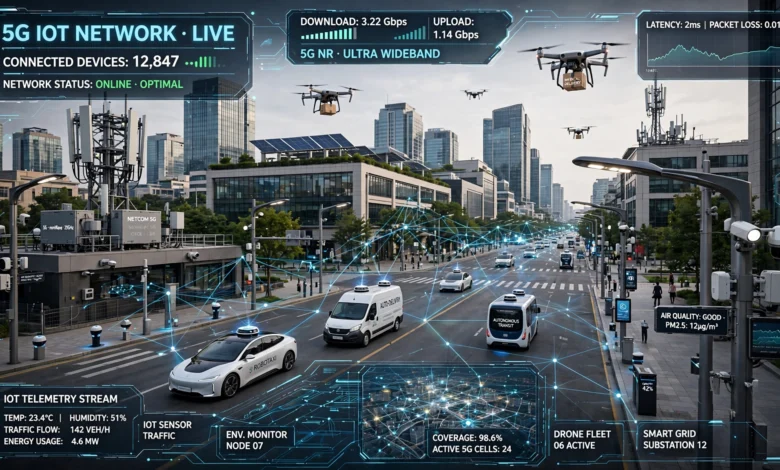
5G IoT expansion is no longer a talking point for industry conferences. It’s happening right now, in warehouses running autonomous forklifts, in hospitals tracking equipment in real time, and in cities managing traffic lights that actually respond to traffic. The Internet of Things has existed for over a decade, but it was held back by networks that simply couldn’t keep up with the volume, speed, and reliability that billions of connected devices demand. 5G changed that equation.
Where 4G gave IoT a foothold, 5G is giving it room to run. We’re talking about networks that can handle massive device density, respond in milliseconds, and stretch battery life on sensors from months to years. According to GSMA Intelligence, global 5G connections surpassed 2.7 billion by the end of 2025, and the technology is now moving into a phase where IoT, standalone architecture, and enterprise use cases matter more than raw coverage numbers.
This article breaks down exactly what 5G brings to IoT, why it matters for businesses and consumers alike, and where this expansion is headed over the next few years. Whether you’re a network engineer, a business owner exploring smart infrastructure, or just curious about the tech shaping your daily life, you’ll walk away with a clear picture of how these two technologies fit together and why the pairing is such a big deal.
What Is 5G’s Role in IoT Expansion?
At its core, 5G’s role in IoT expansion comes down to solving three problems that older networks couldn’t: speed, capacity, and latency. IoT devices range from a simple temperature sensor in a warehouse to a self-driving delivery robot navigating city streets. Each of these has different connectivity needs, and 5G was built with that variety in mind.
Unlike 4G, which was designed primarily for smartphones and mobile broadband, 5G was engineered from the ground up with machine-to-machine communication as a priority. That’s a meaningful shift. It means the network itself is built to support massive IoT deployments rather than treating them as an afterthought.
Here’s the short version of what 5G contributes to IoT growth:
- Higher device density — one 5G cell can support far more connected devices per square kilometer than 4G.
- Ultra-low latency — critical for applications like remote surgery, industrial automation, and autonomous vehicles.
- Better energy efficiency — extending the battery life of low-power sensors used in agriculture, logistics, and smart metering.
- Network slicing — letting operators carve out dedicated virtual networks for specific IoT use cases without interference from other traffic.
Why 4G Wasn’t Built for This Scale
Before diving deeper into 5G’s contributions, it helps to understand why 4G started to buckle under the weight of IoT ambitions. 4G LTE networks were designed for a world of smartphones and tablets, not billions of small, often stationary devices sending tiny bursts of data around the clock.
The Capacity Problem
4G networks typically support around 4,000 to 10,000 connected devices per square kilometer, depending on configuration. That sounds like a lot until you consider a smart city deployment with sensors on every streetlight, parking spot, trash bin, and traffic signal. Add in industrial IoT sensors, wearable health monitors, and connected vehicles, and that ceiling gets hit fast.
The Latency Problem
4G latency generally sits between 30 and 50 milliseconds. For streaming video or browsing the web, that’s fine. For a factory robot arm coordinating with another machine in real time, or a connected car making a split-second braking decision, that delay is unacceptable. Even small lags can cause safety issues or costly production errors.


The Battery Life Problem
Many IoT sensors are deployed in remote or hard-to-reach places, think agricultural fields, pipelines, or shipping containers. Swapping batteries every few months isn’t practical. 4G’s power demands made long-term, low-maintenance deployments difficult to scale economically.
How 5G Solves These Bottlenecks
This is where 5G and IoT genuinely complement each other. 5G isn’t just a faster version of 4G; it’s built with distinct components that directly address IoT’s biggest pain points.
1. Massive Machine-Type Communications (mMTC)
mMTC is one of the three core pillars of 5G, alongside enhanced mobile broadband and ultra-reliable low-latency communications. It’s specifically designed to connect a huge number of devices in a small area, up to a million devices per square kilometer in ideal conditions. This is what makes dense IoT deployment in smart cities and industrial campuses realistic.
2. Ultra-Reliable Low-Latency Communication (URLLC)
URLLC brings latency down to as low as 1 millisecond. That level of responsiveness is what makes use cases like remote robotic surgery, autonomous vehicle coordination, and real-time industrial control genuinely viable rather than theoretical.
3. Network Slicing
Network slicing allows a single physical 5G network to be divided into multiple virtual networks, each tailored to a specific purpose. A hospital could run a dedicated slice for connected medical devices, isolated from the slice handling guest Wi-Fi traffic. This isolation improves both security and performance for IoT connectivity.
4. 5G RedCap and Massive IoT Standards
Not every IoT device needs blazing speed. GSMA Intelligence notes that reduced capability standards like 5G RedCap are becoming central to scaling IoT efficiently, since they let simpler devices connect to 5G networks without the cost and power draw of full 5G modems. The 2026 State of 5G report benchmarks 46 markets and highlights that advanced capabilities including 5G standalone, IoT, and RedCap are creating a widening gap between leading and lagging regions.
5. Improved Energy Efficiency
5G’s design allows devices to enter deep sleep states between transmissions and wake up only when needed. This is a major reason sensor batteries can now last years instead of months, a critical factor for IoT expansion into agriculture, environmental monitoring, and asset tracking.
Real-World Applications Driving 5G IoT Expansion
Theory is one thing, but the real proof of 5G’s role in IoT expansion shows up in how industries are actually using it.
Smart Cities
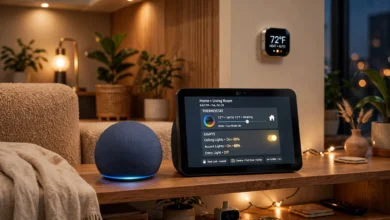
Cities are deploying 5G-connected sensors for traffic management, waste collection, air quality monitoring, and public safety. Streetlights that dim when no one’s around, parking sensors that guide drivers to open spots, and gunshot-detection systems all rely on the density and responsiveness that 5G provides.
Industrial IoT and Manufacturing
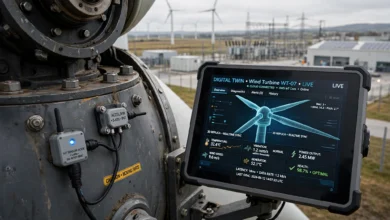
Factories are replacing fixed wiring with 5G connectivity for robotic arms, automated guided vehicles, and predictive maintenance sensors. This flexibility means production lines can be reconfigured without ripping out cables, and machines can share data instantly to catch problems before they cause downtime.
Healthcare
Connected medical devices, remote patient monitoring, and even robotic-assisted surgery depend on 5G’s low latency and reliability. Hospitals are also using 5G-enabled asset tracking to locate equipment like wheelchairs and IV pumps in real time, cutting down on wasted staff hours.
Agriculture
Soil moisture sensors, livestock trackers, and autonomous tractors are becoming common on large farms. 5G’s ability to support low-power, wide-area connections means these devices can operate in remote fields for extended periods without needing frequent maintenance.
Connected Vehicles and Transportation
Vehicle-to-everything (V2X) communication, where cars talk to traffic infrastructure, other vehicles, and pedestrians’ devices, relies heavily on 5G’s low latency. This is foundational for advancing autonomous driving and reducing accidents at intersections.
Logistics and Supply Chain
Real-time shipment tracking, smart warehousing, and automated inventory systems all benefit from 5G’s capacity to connect thousands of tags and sensors across a facility or shipping route without network congestion.
The Numbers Behind the Growth
It helps to look at where this is actually headed. GSMA Intelligence forecasts 38.7 billion IoT connections globally by 2030, growing at a compound annual rate of 8 percent, with much of that growth underpinned by ambient IoT, non-terrestrial networks, and eSIM technology. Separately, wide-area IoT connections are projected to rise from 3.6 billion in 2023 to 7.2 billion by 2029, a 12 percent compound annual growth rate, with cellular IoT connections following a similar trajectory.
What’s notable is that this growth isn’t just about adding more devices. Industry analysts point to 5G Massive IoT, 5G RedCap, and 4G LTE Cat-1bis as the key technologies shaping how these connections scale, each suited to different device and application needs. In other words, the expansion is becoming more sophisticated, not just bigger.
Operators are taking notice too. GSMA Intelligence data shows more than half of mobile operators plan to begin deploying 5G-Advanced within a year of its commercial availability, driven in large part by use cases like low-cost IoT support and multicast services. This tells you where investment priorities are headed: not just faster phones, but smarter, cheaper, and more reliable machine connectivity.
Challenges Still Standing in the Way
It would be misleading to present 5G IoT expansion as a smooth, obstacle-free process. There are real challenges that businesses and network operators are still working through.
- Cost of deployment — Building out 5G infrastructure, especially standalone (SA) networks that unlock the full benefits for IoT, requires significant capital investment.
- Fragmented global rollout — markets differ significantly in standalone 5G readiness, uplink performance, and IoT-specific capabilities, even when they look similar on basic coverage, which creates uneven experiences depending on region.
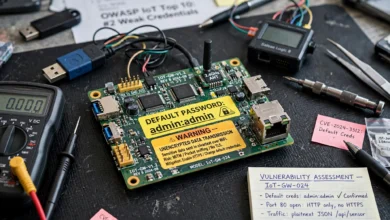
- Security concerns — More connected devices mean a larger attack surface. Weak security on cheap IoT sensors can become an entry point for broader network breaches.
- Interoperability — Devices from different manufacturers using different standards can complicate large-scale IoT deployments, especially across borders.
- Spectrum availability — Not every country has allocated sufficient spectrum for 5G, which limits how quickly IoT applications can scale in certain regions.
What’s Next: 5G-Advanced and Beyond
The next chapter isn’t just about wider 5G coverage, it’s about deeper capability. 5G-Advanced, based on 3GPP Release 18, is set to bring improvements specifically aimed at IoT, including better support for AI-driven applications and more efficient handling of massive device density.
Emerging technologies are also reshaping what’s possible:
- Ambient IoT — devices that harvest energy from their environment, removing the need for batteries entirely in some applications.
- Non-terrestrial networks (NTN) — extending 5G-IoT connectivity to remote regions using satellites, useful for agriculture, shipping, and emergency response in areas without cellular towers.
- eSIM advancements — new GSMA specifications are simplifying how IoT devices get provisioned and managed remotely, which matters a lot when you’re deploying thousands of sensors across multiple countries.
Industry watchers are also flagging a shift in what “success” looks like for 5G. AI-driven services like real-time video analytics and industrial robotics increasingly depend on sustained uplink speeds, low latency, and consistent performance, requirements that standalone 5G networks are built to meet more reliably than earlier non-standalone deployments. That uplink capability matters directly for IoT applications that need to send large volumes of sensor or video data back to a central system quickly.
How Businesses Can Prepare for 5G IoT Expansion
If you’re a business leader wondering how to actually act on this shift, here’s a practical starting point:
- Audit your current connectivity needs. Figure out which processes would genuinely benefit from lower latency or higher device density before investing in new infrastructure.
- Start with a pilot project. Test 5G-enabled IoT in one area of your operation, like inventory tracking or equipment monitoring, before scaling company-wide.
- Factor in security from day one. Work with vendors who prioritize device-level encryption and regular firmware updates.
- Talk to your network provider about private 5G options. For manufacturing or logistics facilities, a private 5G network can offer more control and reliability than relying on public infrastructure.
- Plan for eSIM management. If you’re deploying IoT devices across multiple locations or countries, remote SIM provisioning will save significant operational headaches down the line.
For readers who want to dig into the underlying data further, GSMA’s ongoing research on 5G and network transformation trends and the broader GSMA Intelligence 5G IoT research offer a detailed look at where the industry is placing its bets. Market analysis from cellular IoT statistics reports also breaks down connection forecasts by technology type, which is useful if you’re trying to plan infrastructure investment on a specific timeline.
Frequently Asked Questions
Does every IoT device need 5G? No. Many simple sensors work fine on 4G LTE-M or NB-IoT. 5G matters most for applications needing low latency, high device density, or large data throughput, like autonomous vehicles or industrial robotics.
Is 5G more expensive to deploy for IoT than 4G? Initial infrastructure costs can be higher, but 5G’s efficiency and long-term scalability often reduce operational costs, especially for large deployments.
What industries benefit most from 5G IoT expansion? Manufacturing, healthcare, agriculture, logistics, and smart city infrastructure are seeing the most immediate and measurable benefits.
How does 5G improve IoT device battery life? Through power-saving features like extended discontinuous reception and deep sleep modes, which let devices stay dormant between data transmissions.
Conclusion
5G IoT expansion is fundamentally changing what’s possible for connected devices, moving the conversation from simple connectivity to real-time, large-scale, and energy-efficient machine communication. From smart cities and factories to healthcare and agriculture, 5G’s combination of massive device support, ultra-low latency, and network slicing is solving the exact problems that held IoT back on older networks.
Challenges around cost, security, and uneven global rollout remain, but with 5G-Advanced, ambient IoT, and satellite-based connectivity on the horizon, the pace of expansion is only picking up. Businesses that start planning now, even with small pilot projects, will be better positioned to take advantage of this shift as it continues to unfold over the next few years.