How to Use Slack More Effectively
Learn how to use Slack more effectively with proven habits for channels, notifications, threads, and automation that actually stick.
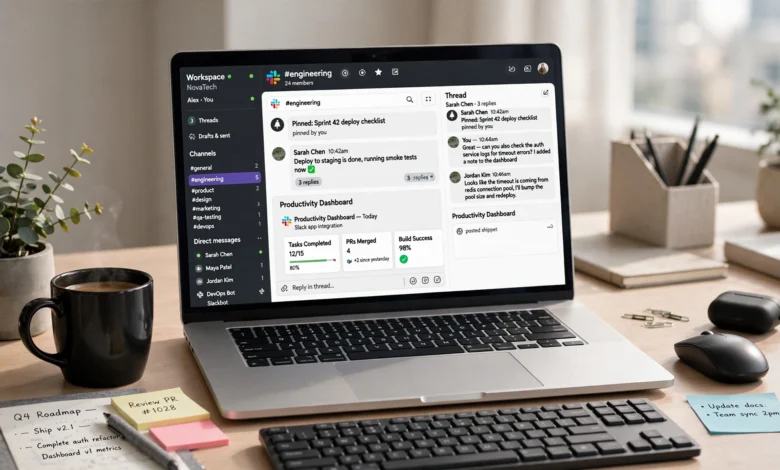
If you want to use Slack more effectively, the fix usually isn’t a new feature. It’s fewer channels, better habits, and a team that agrees on how to communicate. Most people open Slack expecting a tidy inbox and instead find twenty unread channels, a dozen DMs, and a notification badge that never hits zero. That’s not a Slack problem. That’s a habits problem, and habits are fixable.
Slack was built to replace the chaos of long email threads with something faster and more searchable. For a lot of teams, it’s done the opposite. Channels multiply, threads get ignored, and everyone develops their own private system for deciding what actually needs a reply. The tool didn’t get worse. It just got used without much structure.
The good news is that using Slack effectively doesn’t require a total overhaul or a paid consultant. It comes down to a handful of decisions: how you organize channels, when you use threads versus DMs, how you handle notifications, and whether your team has agreed on any ground rules at all. This guide walks through each of those pieces in order, starting with the structural stuff and moving into the daily habits that make or break a workspace.
By the end, you’ll have a practical plan for turning Slack from a source of noise into an actual productivity tool, whether you’re setting up a workspace from scratch or trying to rescue one that’s already gotten out of hand.
Why Most Teams Struggle to Use Slack Effectively
Before fixing anything, it helps to understand why Slack goes sideways in the first place. It’s rarely one big issue. It’s a pile of small ones.
- Channel sprawl. New channels get created for every project, every event, and every passing idea, and almost none of them get archived.
- No agreed-upon norms. Some people expect instant replies. Others check Slack twice a day. Without shared expectations, both sides get frustrated.
- Notifications set to “everything.” Default settings ping you for every message in every channel you’ve joined, which trains your brain to either ignore Slack entirely or check it constantly.
- Threads used inconsistently. Half the team replies in threads, the other half replies in the main channel, and conversations become impossible to follow.
- No home for decisions. Important calls get made in a DM or a random channel and then vanish, so the same question gets asked again two weeks later.
None of these are technical problems. They’re organizational ones, which is actually good news, because it means you can fix them without waiting on a software update.
Start With a Clean Channel Structure
If you only fix one thing, fix this. A messy channel list is the single biggest reason people stop trusting Slack search and start relying on memory (which fails constantly).
Use a Consistent Naming Convention
Pick a naming pattern and stick to it across the whole workspace. A common approach is a prefix system:
team-for standing team channels (team-design,team-sales)proj-for time-bound projects (proj-website-relaunch)topic-for ongoing discussion channels (topic-product-feedback)ext-for anything involving people outside your company
This sounds minor, but it changes how people search. When someone types proj- into the channel switcher, they immediately see every active project instead of scrolling a random alphabetical list.


Group Channels Into Sections
Slack lets you organize your sidebar into custom sections, and almost nobody uses this well. Instead of one long scrolling list, group channels by team, priority, or project phase, then collapse the sections you don’t need open all day. This alone can cut the visual noise of a busy workspace in half.
Archive Aggressively
If a channel hasn’t had a message in 60 to 90 days, archive it. Archived channels aren’t deleted, they’re just out of the way, and anyone can search them or reopen them later. A workspace with 40 active channels is far easier to navigate than one with 40 active and 200 dead ones mixed together.
Make Threads Your Default, Not an Afterthought
This is probably the single most common complaint about Slack: conversations become unreadable because replies scatter across the main channel instead of staying attached to the original message.
The fix is simple in theory and hard in practice: reply in threads by default, especially in any channel with more than five or six regular participants. A few guidelines that actually stick:
- If your reply is a direct response to one message, thread it.
- If you’re introducing a new topic, post a new message rather than hijacking someone else’s thread.
- Use “Also send to #channel” sparingly, only when the reply genuinely needs broad visibility.
- In smaller, fast-moving channels (like a two-person project sync), threads can feel like overkill. Use judgment.
Getting a whole team to thread consistently usually takes a light nudge from a team lead for a couple of weeks, not a permanent policy document. Once people see how much easier a threaded channel is to scan, most adopt it on their own.
Set Notification Boundaries That Protect Focus
Default Slack notifications are built to maximize engagement, not your ability to get anything done. If you want to use Slack more effectively, this is the section worth spending the most time on.
Mute What Doesn’t Need Real-Time Attention
Go through your channel list and mute anything that isn’t urgent. Announcement channels, low-traffic topic channels, and channels you’re only in for occasional visibility don’t need push notifications. You can still check them when you have a moment.
Customize Notification Keywords
Under Preferences > Notifications, you can set custom keywords that trigger an alert even in muted channels, like your name, a project code word, or “urgent.” This lets you stay quiet in the background while still catching anything that genuinely needs you.
Use Scheduled “Do Not Disturb” Hours
Set DND hours outside your working window so messages don’t ping your phone at 9 p.m. Slack queues them and delivers a summary when you’re back online. Pair this with a custom status (more on that below) so people know you’re not ignoring them, you’re just off the clock.
Turn Off Notifications for Reactions and Threads You’re Not Following
Small thing, but it adds up. Reaction notifications and thread-watching alerts are two of the most common sources of low-value pings. Trim them down in the notification preferences and you’ll notice the difference within a day.
Use Statuses and Do Not Disturb to Set Expectations
A custom status is one of the most underused features in Slack, and it solves a real problem: people assuming you’re available when you’re not.
Some practical uses:
- “In a meeting until 3pm” — sets expectations without you having to explain yourself in every channel
- “Focus mode 🎧” — signals that replies will be delayed, not ignored
- “Out sick” or “OOO until Monday” — paired with an auto-reply, this cuts down on unnecessary pings entirely
If your calendar tool is integrated with Slack, statuses can update automatically based on your meetings, which removes the need to manually toggle it throughout the day. It’s a small habit, but it does a lot of quiet work in reducing interruptions on both sides of a conversation.
Master Search and Saved Items to Stop Losing Information
A huge share of Slack frustration isn’t about sending messages, it’s about finding them again later. Slack’s search is genuinely powerful, but most people only use the most basic version of it.
A few search operators worth knowing:
from:@username— messages from a specific personin:#channel— restrict results to one channelhas:linkorhas:file— filter for shared contentbefore:/after:— narrow by date range
Combine these and you can find a specific decision from six weeks ago in seconds instead of scrolling forever.
Beyond search, the Save for Later feature (the bookmark icon on any message) is worth building into your routine. Instead of leaving a channel unread as a reminder to deal with something, save the specific message. Your unread counts stay accurate, and your saved items list becomes a lightweight to-do list that lives inside the app you’re already using all day.
Automate the Repetitive Stuff With Workflow Builder and Integrations
Once the basics are in place, Slack’s automation tools can remove a lot of manual, repetitive work.
Workflow Builder
Slack’s built-in Workflow Builder lets you create simple automated sequences without writing code: a form that routes IT requests to the right channel, an automatic welcome message for new channel members, or a recurring reminder for a weekly status update. It’s not a replacement for a full project management tool, but for lightweight internal processes, it removes a lot of manual nagging.
Integrations
Connecting the tools your team already uses cuts down on app-switching, which is one of the biggest hidden time costs in any workday. Common integrations worth setting up:
- Google Drive or Dropbox for file previews without leaving Slack
- GitHub or GitLab for pull request and deploy notifications
- Google Calendar for meeting reminders and status syncing
- Project management tools (Asana, Trello, Jira) for task updates posted directly into relevant channels
The key is restraint. Every integration adds another source of notifications, so only connect tools that replace a manual check-in, not ones that just add more noise.
Use Huddles for Quick Conversations Instead of Meetings
Not every conversation needs a calendar invite. Slack’s huddle feature is essentially a lightweight, instant audio (or video) call that starts with one click, no scheduling required. For a quick question that would take ten back-and-forth messages to resolve in text, a two-minute huddle is often faster and clearer.
A good rule of thumb: if a Slack thread hits four or five replies without resolving anything, that’s usually a sign to jump on a huddle instead of continuing to type past each other.
Establish Team-Wide Slack Communication Guidelines
Individual habits only go so far if the rest of the team isn’t on the same page. A short, shared set of Slack communication guidelines prevents most of the friction that builds up over time. This doesn’t need to be a long document, just a few agreed norms:
- What counts as urgent enough for a DM versus a channel post
- Expected response times during working hours (and that there’s no expectation outside them)
- When to use threads versus new messages
- Which channels are for quick chat and which are for decisions that need to be findable later
- How the team handles @here and @channel mentions (sparingly, ideally)
Write it down somewhere permanent, like a pinned message in your main team channel, and revisit it every few months as the team grows or habits drift.
Keep Slack Connect Channels Clean for External Partners
If you use Slack Connect to collaborate with clients, vendors, or partners outside your company, the stakes for good organization go up. External participants don’t have context on your internal shorthand, channel naming, or notification norms, so a little extra structure goes a long way:
- Use a clear, dedicated naming convention for external channels (the
ext-prefix mentioned earlier works well) - Pin a short welcome message explaining response-time expectations
- Keep internal-only discussions out of shared channels, even in threads
- Archive Slack Connect channels promptly once a project wraps, since external channels tend to get forgotten and left open indefinitely
Treating external channels with a bit more formality protects both your team’s internal conversations and the relationship with the people on the other side.
Common Slack Mistakes That Undermine Productivity
Even with good structure in place, a few habits tend to creep back in and undo the progress. Watch for these:
- Reviving old threads days later without context, forcing everyone to scroll up to remember what happened.
- Overusing @channel or @here for things that aren’t actually urgent, which trains people to ignore both.
- Making important decisions in DMs instead of a channel, so there’s no record anyone else can find later.
- Treating Slack like email, with long formal messages instead of short, scannable ones.
- Never archiving anything, which slowly turns the sidebar into an unusable list of dead channels.
Most of these are easy to catch once you’re aware of them. The goal isn’t perfection, it’s building a workspace where the default behavior is the efficient one.
For teams that want a deeper technical reference, Slack’s own Slack Help Center covers every setting mentioned here in more detail, and it’s worth bookmarking for anyone setting up a workspace from scratch. If you’re interested in the research behind why constant notifications hurt focus and output, the Harvard Business Review’s coverage of workplace communication tools is a solid starting point.
Conclusion
Learning to use Slack more effectively isn’t about discovering a secret feature nobody else knows about. It’s about cleaning up channel structure, defaulting to threads, taming notifications, using statuses to set expectations, and getting the whole team to agree on a few basic norms. None of these changes are dramatic on their own, but together they turn Slack from a constant source of noise into a tool that actually keeps work moving.
Start with the channel cleanup and notification settings first, since those give you the fastest payoff, then layer in threading habits and team guidelines once the foundation is solid. Do that, and Slack stops being something you manage and starts being something that just works.