Virtual Reality in 2025 Is It Finally Worth Buying
Discover if VR headsets are worth buying in 2025. Compare Meta Quest 3, PSVR2, and top models with pricing, features, and gaming insights for your decision.

The question that has lingered in the minds of tech enthusiasts and casual consumers alike for years is finally getting a definitive answer: Is virtual reality truly worth the investment in 2025? After years of false starts, overpriced hardware, and limited content libraries, the VR industry has reached a critical turning point. The market reached USD 59.96 billion in 2022 and is projected to hit USD 79.36 billion in 2023, signaling unprecedented growth and mainstream adoption.
Today’s VR headsets are lighter, more affordable, and packed with features that were once reserved for premium devices. The Meta Quest 3 represents a massive upgrade with new pancake lenses that sit closer to the face and display gorgeous picture quality, while budget options like the Meta Quest 3S start at just $299, making immersive gaming accessible to millions. The technology has evolved from a niche novelty into a practical tool for gaming, fitness, education, and enterprise applications.
But does this mean you should rush out and buy a VR headset today? The answer depends on several factors, including your budget, intended use cases, and expectations. Worldwide shipments of AR/VR headsets are expected to grow 39.2% in 2025, with volumes reaching 14.3 million units, indicating strong consumer confidence in the technology. Whether you’re a hardcore gamer seeking next-level immersion, a fitness enthusiast looking for engaging home workouts, or simply curious about the metaverse, 2025 offers compelling options across every price point.
In this comprehensive guide, we’ll explore the current state of virtual reality technology, compare the best VR headsets available, analyze pricing and value propositions, examine the content ecosystem, and help you determine whether now is finally the right time to take the plunge into virtual worlds. The technology has matured significantly, but is it mature enough for you?
The Current State of Virtual Reality Technology
Major Technological Advancements
The VR market in 2025 represents a dramatic leap forward from earlier generations. The Meta Quest 3 features sleek pancake lenses replacing bulkier Fresnel designs, resulting in a smaller shell and cleaner visuals. These improvements address one of the biggest complaints about earlier VR headsets: comfort and visual clarity.
With crisp 2064 x 2208 pixel resolution per eye, virtual spaces gain enough detail to practically erase the screen-door effect that plagued earlier headsets. This means text is readable without squinting, and fine details pop in games and work applications. Modern VR technology also incorporates advanced tracking systems, with most devices offering six degrees of freedom (6DoF) tracking that accurately captures head and body movements.
Mixed reality capabilities have become standard rather than exceptional. Color passthrough technology allows users to see their room in detail while virtual elements linger in place, transforming VR from an isolating experience into an integrated one. This feature proves particularly valuable for longer sessions and practical applications like virtual workspace setups.
Market Growth and Adoption
The numbers tell a compelling story about VR adoption in 2025. The number of VR hardware users reached 97.7 million in 2023, representing an approximate growth of 225.67% from 30 million users in 2020. This explosive growth indicates that virtual reality has moved beyond early adopters into mainstream consciousness.
The global VR headsets market size was estimated at USD 9.1 billion in 2024 and is expected to grow from USD 10.3 billion in 2025 to USD 51.9 billion in 2034, at a CAGR of 19.7%. These projections reflect sustained industry confidence and increasing consumer interest across multiple sectors, including gaming, education, healthcare, and enterprise training.


Regional variations in adoption reveal interesting patterns. The European AR and VR market is projected to expand from $2.8 billion in 2021 to $20.9 billion in 2025, while North America continues to lead in overall market share. 48% of U.S. consumers have experienced VR technology, and 13% of households own VR headsets, demonstrating significant but not yet universal penetration.
Hardware and Software Ecosystem
The VR gaming landscape has matured considerably. Gaming dominates software and services spending on AR/VR headsets, with games like Animal Company, Beat Saber, and Gorilla Tag representing top-grossing titles. However, usage patterns reveal interesting diversification beyond gaming.
60% of VR consumers reported using VR headsets more than once a week, and 42% of owners use VR headsets to watch TV or films. This indicates that VR headsets have become multipurpose entertainment devices rather than single-function gaming accessories. The content library spans immersive games, fitness applications, educational experiences, social platforms, and productivity tools.
Enterprise adoption has accelerated dramatically. Over 75% of Fortune 500 companies now embed VR in learning strategies, with Boeing recording a 75% cut in training hours and Delta Air Lines raising technician proficiency checks by 5,000%. This commercial validation provides confidence that VR technology delivers measurable value beyond entertainment.
Best VR Headsets of 2025: Detailed Comparison
Meta Quest 3: The All-Rounder Champion
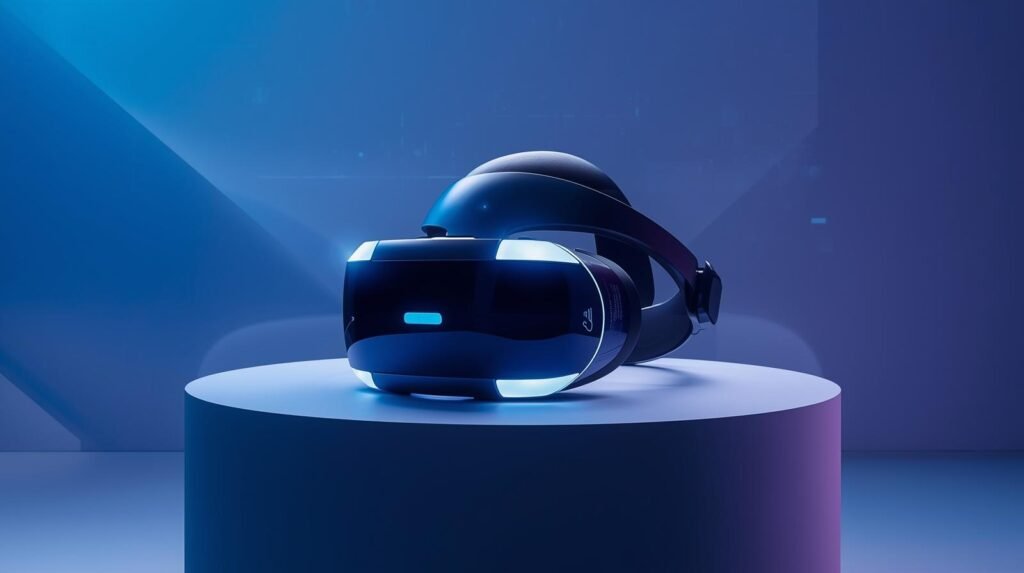
The Meta Quest 3 has established itself as the gold standard for standalone VR headsets in 2025. The Meta Quest 3 dominates 74.6% of the VR market, reflecting its balanced combination of performance, price, and ecosystem.
Key Specifications:
- Display: 2064 × 2208 pixels per eye
- Lenses: Advanced pancake optics
- Processor: Snapdragon XR2 Gen 2
- Price: $499 (128GB) / $649 (512GB)
- Field of View: ~110°
The Quest 3 ships with improved Touch Plus controllers that feel natural over long stretches, though battery life sits near the familiar two-hour mark. The device functions both as a standalone unit and as a PC VR headset when connected via USB-C or Wi-Fi 6E, providing remarkable flexibility.
The mixed reality features distinguish the Quest 3 from competitors. Users can double-tap the side to see their room in detail while virtual elements linger in place, turning VR from isolating to integrated. This functionality makes the device practical for daily use rather than occasional novelty.
Meta Quest 3S: Budget Excellence
For price-conscious consumers, the Meta Quest 3S delivers exceptional value. The Meta Quest 3S has brought incredible mixed-reality features and great VR gaming specs to an affordable price range, starting at $299.
Key Features:
- Same Snapdragon XR2 Gen 2 processor as Quest 3
- Identical software library and mixed reality functions
- Fresnel lenses instead of pancake lenses
- Three fixed IPD settings vs. continuous adjustment
- Slightly bulkier design
The key difference between the Quest 3S and Quest 3 is visual quality, with the Quest 3S using older Fresnel lenses with a smaller sweet spot and more blur around the edges. For beginners or those primarily interested in gaming and fitness applications rather than visual perfection, the Quest 3S represents an outstanding entry point into virtual reality.
PlayStation VR2: Console Gaming Excellence
Sony’s PSVR2 targets the console gaming market with premium features. Sony’s second venture into VR blends top specs, value, and innovative features, with a growing library of games every month.
Standout Features:
- Stunning OLED display technology
- Advanced haptic feedback in controllers
- Optimized for PlayStation 5 exclusives
- PC compatibility via an adapter
- Eye-tracking technology
The PSVR2 offers impressive graphics and represents one of the best visual experiences in console VR, with advanced controllers featuring haptic feedback that enhances realism. However, it requires a wired connection to the PS5, limiting mobility compared to standalone alternatives. For owners of Sony’s console seeking AAA gaming experiences, the PSVR2 delivers unmatched integration with franchises like Gran Turismo 7 and Horizon Call of the Mountain.
Apple Vision Pro: Premium Spatial Computing
Apple’s entry into VR targets a different audience entirely. At $3,499, the Vision Pro targets professionals who need high-end mixed reality for work, not weekend gaming sessions.
Technical Excellence:
- Dual micro-OLED displays with 23 million total pixels
- Advanced eye, hand, and voice tracking
- M2 and R1 chip combination
- Premium materials: aluminum and carbon fiber
- VisionOS operating system
The stereoscopic visuals beat all comers, delivering wickedly responsive performance and ultra-sharp imagery whether in fully immersive experiences or with apps blended into the real world. The device excels at productivity tasks, content creation, and spatial computing applications. However, the premium pricing and focus on productivity rather than gaming make it unsuitable for most consumers seeking entertainment-focused VR headsets.
Valve Index: PC VR Performance King
For PC gaming enthusiasts, the Valve Index remains a strong contender. The Valve Index delivers exceptional tracking accuracy, immersive audio, and a comfortable design with dual 1440 x 1600 RGB LCDs supporting refresh rates up to 144Hz.
Distinguished Features:
- Near-field off-ear speakers with spatial audio
- Index Controllers with full finger-tracking
- External Lighthouse tracking system
- High refresh rate options (80Hz to 144Hz)
- Access to the entire Steam VR library
The requirement for external sensors and a powerful gaming PC increases both cost and setup complexity. However, for users prioritizing tracking precision and high-fidelity PC VR gaming, the Index delivers premium performance. With the whole of Steam behind it, users would be hard-pressed to be bored in this headset’s list of virtual worlds.
Pricing Analysis: Is VR Affordable in 2025
Entry-Level Options ($199-$349)
The affordability barrier has collapsed dramatically. The Meta Quest 2 is currently available for around $199, significantly cheaper than the Meta Quest 3, which starts at $500. While the Quest 2 represents older technology, it remains capable for casual gaming and media consumption.
Companies like Meta have introduced competitively priced VR headsets such as the Meta Quest 3S priced at $299.99, relatively lower than premium counterparts. This pricing strategy has democratized access to quality VR experiences, making the technology accessible to budget-conscious consumers who previously considered it prohibitively expensive.
The budget VR headset segment now offers legitimate performance rather than compromised experiences. Budget headsets can easily handle popular titles, fitness apps, and even light productivity tasks, with devices under $350 now offering 2K per eye resolution and comfortable visuals.
Mid-Range Excellence ($400-$700)
The mid-range segment offers the best value proposition. At $499, the Meta Quest 3 provides premium features without extreme costs. The PSVR2 sits in this range for PlayStation owners, offering console-quality VR with advanced haptics and visual fidelity.
Even in 2025, the Meta Quest 3 is a clear recommendation for demanding users and remains the most balanced VR/MR headset under $1,000. This price point balances cutting-edge technology with reasonable affordability, making it accessible to mainstream consumers rather than only wealthy early adopters.
Premium Segment ($1,000+)
Premium VR headsets target professionals and enthusiasts. The Valve Index full kit costs $999, while specialized devices like the Apple Vision Pro reach $3,499. The Pico 4 Ultra costs pretty much the same as the Meta Quest 3 with 12GB of RAM and a gorgeous screen, but launching a year after rivals means less diverse storefront offerings.
For most consumers, premium devices represent unnecessary expense unless specific professional requirements or ecosystem preferences justify the investment. The performance delta between mid-range and premium devices has narrowed considerably, making the value proposition of ultra-expensive models questionable for casual users.
Total Cost of Ownership
Beyond the VR headset purchase price, consider additional costs. PC-tethered devices require gaming computers meeting minimum specifications. Users need at least an Nvidia GTX 1060 graphics card, 16GB of DDR4 or DDR5 RAM, and a relatively up-to-date processor for PC VR.
Game purchases add to ownership costs, though many excellent free titles exist. Accessories like premium head straps, protective cases, and prescription lens inserts can add $50-$200 to initial investments. However, standalone headsets like the Quest series eliminate PC requirements, significantly reducing total entry costs.
Content Library: Games and Applications
Gaming Ecosystem Maturity
The VR gaming library has expanded dramatically. 2025 was a standout year for VR titles, with several fantastic games releasing across platforms like Meta Quest 3 and PSVR2. The content spans multiple genres from intense action to peaceful exploration.
Popular VR Games in 2025:
- Beat Saber: Rhythm gaming phenomenon
- Half-Life: Alyx: AAA storytelling showcase
- Gorilla Tag: Social multiplayer sensation
- Marvel’s Deadpool: Superhero action with Neil Patrick Harris
- The Midnight Walk: Tim Burton-esque horror adventure
- Escaping Wonderland: Whimsical puzzle adventure
Classics never die, with Beat Saber having become an emblematic VR experience. The game demonstrates how VR can create entirely new gameplay mechanics impossible in traditional gaming. From rhythm games leveraging motion controls to horror experiences utilizing immersive audio and limited visibility, VR games exploit the medium’s unique capabilities.
Beyond Gaming: Fitness and Wellness
VR fitness applications have emerged as killer use cases for the technology. Supernatural uses licensed music with gameplay similar to Beat Saber but focuses on actual workout routines, featuring real-world locations as backgrounds and coaches providing voice guidance during exercises.
The physicality of VR naturally lends itself to fitness applications. Boxing games, dance experiences, and dedicated workout apps transform exercise from chore to entertainment. Users report higher workout adherence when using VR fitness apps compared to traditional exercise routines, as the immersive nature distracts from physical discomfort.
Productivity and Professional Applications
Training employees on complex machinery, running architectural walkthroughs, and collaborative design sessions that blend digital and physical space represent practical business applications. The VR medium excels at visualization tasks impossible or impractical in traditional formats.
Educational applications span virtual field trips, anatomy visualization, historical recreations, and language immersion experiences. Medical training uses VR for surgical practice and patient empathy training. Real estate professionals conduct virtual property tours, while automotive designers review full-scale vehicle models in virtual reality.
Social and Entertainment Platforms
Social VR platforms like VRChat, Rec Room, and Horizon Worlds attract millions of users seeking virtual social interaction. In terms of hours of use, YouTube led the pack for VR content consumption. Media consumption represents a significant use case, with users watching movies, concerts, and sports in virtual theaters and venues.
The metaverse concept, while overhyped in previous years, has evolved into practical social spaces rather than dystopian replacements for reality. Users host virtual meetings, attend concerts, watch movies together, and participate in shared experiences that feel more connected than video calls while remaining more convenient than physical gatherings.
Pros and Cons of Buying VR in 2025

Advantages of Current VR Technology
Mature Hardware Design
Modern VR headsets address comfort concerns that plagued earlier generations. Pancake lenses sit closer to the face, resulting in lighter devices with improved visual clarity. Weight distribution improvements and better facial interfaces enable extended wear without significant discomfort.
Affordable Entry Points
Strategic investments from key industry players and pricing strategies have made VR technology more reasonable for consumers, contributing to increased adoption rates and market growth. The $299 starting price for capable devices eliminates financial barriers that previously restricted the technology to wealthy enthusiasts.
Rich Content Ecosystem
Years of development have produced substantial content libraries. Standalone platforms like Meta’s store offer thousands of applications spanning games, fitness, education, entertainment, and productivity. PC VR platforms provide access to even larger libraries through Steam and other distribution channels.
Versatile Use Cases
VR adoption in training and education has improved retention rates and made concepts easier to understand, while enabling companies to train employees for real-life situations. The technology serves gaming, fitness, learning, working, socializing, and entertainment needs through a single device.
Wireless Freedom
Standalone VR headsets eliminate cable management frustrations and play space restrictions. The Quest 3’s flexible connectivity allows users to choose high-quality USB Type-C tethering for maximum performance or wireless operation via Wi-Fi 6, depending on the task.
Disadvantages and Limitations
Battery Life Constraints
Battery life sits near the familiar two-hour mark for most sessions. This limitation interrupts extended gaming sessions and requires planning around charging schedules. Optional battery accessories extend runtime but add weight and cost.
Motion Sickness Concerns
Some users experience discomfort ranging from mild unease to severe nausea, particularly during movement-heavy experiences. Individual susceptibility varies, and many users adapt with exposure, but motion sickness remains a barrier for sensitive individuals. Games with artificial locomotion rather than room-scale movement tend to trigger more issues.
Physical Space Requirements
While standalone devices eliminate sensor setup, VR still requires adequate play space. Room-scale experiences demand several feet of clearance in all directions. Users in cramped apartments or shared spaces may struggle to utilize VR headsets effectively, particularly for active gaming and fitness applications.
Social Isolation
Despite social VR platforms, wearing a headset remains inherently isolating from people in physical proximity. Users cannot see family members entering rooms or participating in household activities while immersed in virtual worlds. This limitation makes VR less suitable for social gaming compared to traditional console or PC gaming in shared spaces.
Visual Fidelity Gap
While dramatically improved, VR visuals still lag behind high-end flat-screen gaming on technical metrics. The demands of rendering separate views for each eye at high frame rates limit graphical complexity. Text readability and fine detail work remain challenging compared to traditional displays.
Fragmented Ecosystem
Platform exclusivity divides content across incompatible ecosystems. PlayStation exclusives don’t work on Meta devices. PC VR titles may not run on standalone headsets. This fragmentation complicates purchasing decisions and limits content access compared to the relatively open PC gaming ecosystem.
Who Should Buy VR in 2025
Ideal Candidates for VR Purchase
Gaming Enthusiasts
If you crave immersive gaming experiences impossible on traditional platforms, VR delivers unique value. The global virtual reality gaming market was valued at $26.11 billion in 2023 and is expected to grow at a CAGR of 22.7% between 2023 and 2030. The gaming library spans intense action, atmospheric horror, creative sandbox experiences, and social multiplayer titles.
Console gamers with PlayStation 5 should seriously consider PSVR2 for exclusive AAA titles optimized for Sony’s hardware. PC gamers with powerful rigs can maximize visual fidelity through tethered headsets like Valve Index. Casual gamers benefit from standalone options offering convenience without hardware requirements.
Fitness Seekers
Devices like the Pico 5 Play and Quest 3 Lite are ideal for VR workouts. If you struggle with traditional exercise motivation or find gym memberships unappealing, VR fitness applications transform workouts into engaging games. The immersive nature distracts from physical exertion while gamification elements provide achievement feedback and progression systems.
Users seeking home workout solutions without equipment clutter benefit from VR’s space efficiency. A single device replaces treadmills, exercise bikes, and other bulky equipment while offering more engaging experiences than fitness videos.
Social VR Enthusiasts
People maintaining long-distance relationships or remote friendships find that VR social platforms provide more presence than video calls. Shared virtual experiences like watching movies together, playing mini-golf, or exploring virtual worlds create memorable interactions despite physical separation.
Early Technology Adopters
If you enjoy experiencing cutting-edge technology and don’t mind occasional rough edges, 2025 VR offers substantial improvements over previous generations while remaining in active development. Early adopters gain years of enjoyment while technology continues maturing and content libraries expand.
Professional Use Cases
91% of companies have either already adopted or plan to adopt VR and AR technologies. Professionals in architecture, engineering, medical training, education, and corporate training benefit from VR’s visualization and simulation capabilities. The technology enables practical applications, delivering measurable productivity and training improvements.
Who Should Wait or Skip VR
Motion Sickness Susceptible Individuals
People with severe motion sickness or vestibular sensitivity may find VR fundamentally uncomfortable regardless of hardware quality. While many users adapt with exposure, severely affected individuals should try before buying to avoid expensive devices sitting unused.
Limited Space Situations
Residents of small apartments without adequate clearance for movement-based experiences may find VR frustratingly constrained. If you cannot clear several feet of space for a play area, standalone experiences become limited to seated applications, diminishing the technology’s appeal.
Budget-Constrained Buyers
Despite improving affordability, VR remains a discretionary luxury purchase. If $300-500 represents significant financial strain, priorities likely exist elsewhere. Wait for further price reductions or save specifically for the purchase rather than stretching budgets uncomfortably.
Patient Optimizers
If you prefer waiting for technology maturation, VR continues rapid development. 2025 is set to shake up the three-way rivalry among Meta, Apple, and Google in spatial computing, with Samsung’s Project Moohan debuting Google’s Android XR platform. Competition often drives prices down and features up, rewarding patient consumers.
Traditional Gaming Preference
Players satisfied with traditional gaming experiences who feel no draw toward immersive first-person perspectives shouldn’t force interest. VR offers different experiences rather than objectively superior ones. If watching gameplay footage doesn’t spark enthusiasm, the experience likely won’t either.
Future Outlook: What’s Next for VR
Upcoming Hardware Innovations
Samsung’s Project Moohan will debut Google’s Android XR platform with Snapdragon XR2+ Gen 2 power and advanced color passthrough, offering a genuine alternative ecosystem to Meta’s approach. This competition benefits consumers through feature improvements and pricing pressure across the market.
The PS VR3 is expected to be completely wireless, eliminating one of the biggest drawbacks of its predecessor, with rumors that Sony is exploring cloud VR gaming, meaning users may not need a PlayStation console. Wireless high-fidelity VR represents the next major convenience breakthrough.
Technical Improvements on Horizon:
- Longer battery life through more efficient processors
- Higher resolution displays approaching retina-quality visuals
- Improved eye-tracking for foveated rendering
- Lighter form factors approaching regular glasses weight
- Enhanced haptic feedback beyond controllers
- Brain-computer interface integration in premium devices
Software and Content Evolution
AI is enhancing the immersive experience by enabling more responsive and adaptive virtual environments, with algorithms analyzing user interactions in real-time for dynamic adjustments. Artificial intelligence integration promises more natural interactions, procedurally generated content, and personalized experiences.
The VR content pipeline continues strengthening as major studios invest in development. AAA gaming franchises increasingly include VR adaptations or native titles. Independent developers exploit VR’s unique capabilities for creative experiences impossible in traditional formats.
Market Predictions
VR is projected to contribute $450.5 billion to the global economy by 2030, indicating sustained growth and increasing economic importance. This massive economic impact reflects diverse applications across entertainment, enterprise, education, healthcare, and other sectors.
Industry forecasts predict a temporary market contraction in 2025 with shipments expected to decline approximately 12% due to delayed product launches, followed by a substantial recovery in 2026 with approximately 87% growth. This temporary dip represents a buying opportunity as prices adjust downward before the next generation launch cycle.
Long-Term Trajectory:
- Convergence of VR and AR into unified mixed reality devices
- Mainstream adoption reaching the majority of households by 2030
- Integration with other emerging technologies (AI, 5G, cloud computing)
- Standardization across platforms reduces fragmentation
- Form factor evolution toward comfortable all-day wear
Also Read: Quantum Computing Explained: What It Means for Your Future
Conclusion
The answer to whether virtual reality is finally worth buying in 2025 is a resounding yes for most people interested in the technology. Virtual reality has moved beyond experimentation into daily use across gaming, enterprise, healthcare, and social spaces, with headsets available for every budget and need from entry-level devices to premium spatial computing platforms. The combination of affordable pricing starting at $299, mature hardware designs delivering comfortable extended wear, rich content ecosystems spanning thousands of applications, and practical use cases beyond entertainment creates a compelling value proposition.
While limitations like battery life, motion sickness susceptibility, and space requirements still exist, the current generation represents the first time VR technology delivers on its promises without requiring compromises or excuses. Whether you choose the budget-friendly Meta Quest 3S, the balanced Meta Quest 3, or specialized options like PSVR2 for console gaming, 2025 offers legitimate entry points into immersive experiences that finally justify the hype. For those still hesitant, the rapidly approaching competition from Samsung’s Android XR platform and continued market maturation means waiting carries the opportunity cost of missing years of enjoyment for marginal future improvements. The technology has arrived—the only question is whether you’re ready to experience it.