How IoT Technology is Reshaping Healthcare, Retail, and More
Discover how IoT technology transforms healthcare, retail, agriculture, and manufacturing. Learn about smart devices, real-time data, and digital innovation.
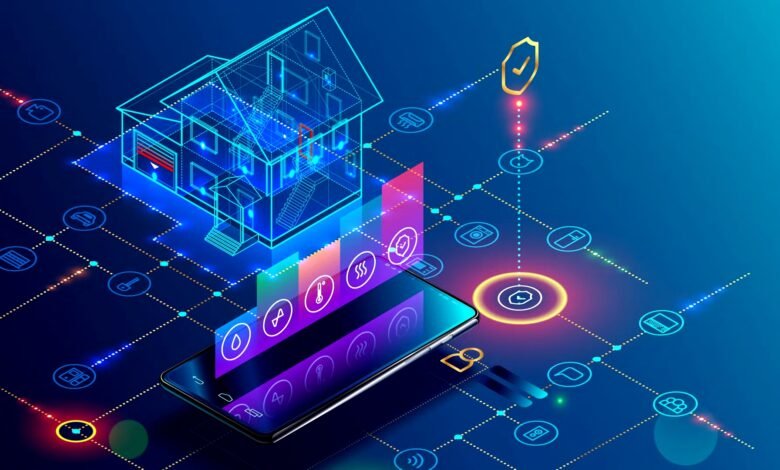
The world around us is getting smarter. Your watch tracks your heart rate, your refrigerator orders groceries, and factories predict equipment failures before they happen. This is not science fiction. It’s the Internet of Things in action, and it’s changing how entire industries operate.
IoT technology connects physical objects to the internet through sensors, software, and network connectivity. These smart devices collect and exchange data without much human intervention, creating systems that can monitor, analyze, and respond to real-world conditions in real time. What started as a concept in the 1980s has exploded into a multi-billion dollar industry that touches nearly every aspect of modern life.
The healthcare sector is experiencing perhaps the most dramatic transformation. Connected devices now monitor patients remotely, track vital signs continuously, and alert doctors to potential problems before they become emergencies. The Internet of Medical Things (IoMT) market is predicted to reach $176 billion by 2026 10 Ways Internet of Things(IoT) Impacts Healthcare Security – Ordr, representing one of the fastest-growing segments of the IoT landscape.
Retail is undergoing a similar revolution. Eight in ten retail stores report that IoT has improved overall customer experience and increased business efficiency Retail IoT: Applications, Challenges, and Solutions | IoT For All. From smart shelves that automatically reorder products to checkout systems that eliminate lines entirely, IoT in retail is redefining what it means to shop.
But the impact goes far beyond these two industries. Manufacturing, agriculture, logistics, and transportation are all being reshaped by smart sensors and connected systems. This article explores how IoT is transforming these sectors and what it means for businesses and consumers alike.
Understanding IoT Technology and Its Core Components
Before diving into specific applications, it’s important to understand what makes IoT technology work. At its foundation, IoT consists of several key elements working together.
- Smart devices form the backbone of any IoT system. These are everyday objects embedded with sensors, processors, and communication hardware. A sensor might measure temperature, detect motion, track location, or monitor dozens of other variables. The processor analyzes this data locally, while communication hardware transmits information to other devices or cloud platforms.
- Network connectivity links everything together. IoT devices use various connectivity technologies including WiFi, Bluetooth, cellular networks, Zigbee, and LoRaWAN What is the Internet of Things (IoT)? | IBM. The choice depends on factors like range requirements, power consumption, and data transmission needs.
- Cloud computing provides the infrastructure to store and process massive amounts of data generated by IoT devices. Cloud platforms offer the computational power needed to run advanced analytics and machine learning algorithms on this data.
- Data analytics turns raw information into actionable insights. Modern IoT systems use big data analytics, machine learning, and artificial intelligence to identify patterns, predict outcomes, and automate decision-making.
How IoT Is Revolutionizing Healthcare
The healthcare industry has embraced IoT technology with remarkable enthusiasm, and for good reason. The benefits extend to patients, doctors, hospitals, and insurance companies.
Remote Patient Monitoring and Wearable Devices
Remote patient monitoring is the most common application of IoT devices for healthcare, automatically collecting health metrics like heart rate, blood pressure, and temperature from patients who are not physically present in a healthcare facility 10 Ways Internet of Things(IoT) Impacts Healthcare Security – Ordr.
Wearable devices have become increasingly sophisticated. Modern smartwatches and fitness trackers do more than count steps. They monitor:

- Heart rate and rhythm irregularities
- Blood oxygen saturation levels
- Sleep patterns and quality
- Physical activity and calorie expenditure
- Blood glucose levels for diabetic patients
These devices provide continuous monitoring that periodic doctor visits simply cannot match. When an IoT sensor detects a patient’s unusually low heart rate, it may generate an alert so healthcare professionals can intervene 10 Ways Internet of Things(IoT) Impacts Healthcare Security – Ordr.
Connected Medical Equipment and Hospital Operations
Beyond patient monitoring, IoT devices are transforming hospital operations. IoT devices tagged with sensors track the real-time location of medical equipment like wheelchairs, defibrillators, nebulizers, and oxygen pumps IoT in Healthcare Industry | IoT Applications in Healthcare – Wipro. This prevents equipment loss, ensures availability when needed, and optimizes resource allocation.
Smart sensors measure parameters like pH levels, turbidity, and contaminations in water systems, providing real-time alerts if water quality falls below safety standards 9 Transforming Applications of IoT in Healthcare | StartUs Insights. In operating rooms, IoT systems monitor air quality, temperature, and sterility to maintain optimal conditions for surgeries.
Improving Treatment Outcomes and Reducing Costs
The impact on healthcare quality and costs is substantial. IoT technology enhances patient care, improves treatment outcomes, and reduces costs for patients while enabling healthcare providers to streamline processes and improve workflows IoT in healthcare: benefits and challenges | Stfalcon.
Telemedicine platforms powered by IoT allow doctors to conduct virtual consultations using real-time patient data. This reduces the need for in-person visits, lowers healthcare costs, and makes medical care accessible to people in remote areas.
Transforming Retail Through Smart Technology
Walk into a modern retail store and you might not notice the revolution happening around you. But beneath the surface, IoT in retail is changing everything from inventory management to customer engagement.
Smart Inventory Management and Supply Chain Visibility
Inaccurate inventory tracking leads to stock-outs and overstock, costing retailers billions annually Retail IoT: Applications, Challenges, and Solutions | IoT For All. IoT solves this problem through automated inventory visibility.
Smart shelves equipped with weight sensors and RFID tags monitor product levels in real time. When product inventory is low, the system offers to reorder the adequate amount based on analytics acquired from IoT data Retail IoT: Applications, Challenges, and Solutions | IoT For All.
GPS and RFID technologies track products throughout their supply chain, with connected sensors giving real-time data that helps stores identify bottleneck issues and speed up deliveries How IoT is Transforming The Retail Industry. This is particularly valuable for perishable goods where temperature monitoring during transport is critical.
Enhancing Customer Experience
IoT technology enables retailers to create personalized shopping experiences. Retailers can understand the context (the time and place of the customer) to identify when they are certain the customer needs help or an incentive to purchase, and respond proactively 5 IoT applications retailers are using today | SAS.
Some of the ways retailers use IoT to improve customer experience include:
- Automated checkout systems: IoT-powered Point of Sale systems use smart tags on items that sensors read when customers walk past a special area at the store’s exit, automatically charging their account through their phone How IoT is Transforming The Retail Industry
- Personalized offers: Beacon technology delivers targeted discounts based on customer location and shopping history
- Smart mirrors: Digital mirrors in fitting rooms suggest complementary items and allow virtual try-ons
- Real-time product information: Customers can scan products with their smartphones to access detailed specifications, reviews, and availability
Optimizing Store Operations
Beyond customer-facing applications, IoT improves back-end operations. Video or WiFi foot-traffic monitoring shows if customers dwell over a product area, allowing stores to direct an associate to help that customer in real time or analyze the information later to adjust store layouts 5 IoT applications retailers are using today | SAS.
Smart IoT devices track, watch, and send alerts to store staff for sudden temperature changes, energy consumption, heating, gas leaks, and power outages How IoT is Transforming The Retail Industry. Energy management systems can reduce operational costs by around 20% annually through optimized use of lighting, heating, and air conditioning.
IoT Applications Beyond Healthcare and Retail
While healthcare and retail showcase dramatic IoT transformations, other industries are experiencing equally profound changes.
Smart Agriculture and Precision Farming
The connected agriculture market stood at USD 1.8 billion globally by the end of 2018 and is expected to grow to USD 4.3 billion by 2023 at a Compound Annual Growth Rate of 19.3% 5 IoT Applications in Agriculture Industry | Smart Farming Solutions.
Smart farming leverages IoT to optimize every aspect of agricultural production:
- Soil monitoring sensors track moisture levels, pH, and nutrient content, enabling precise irrigation and fertilization
- Weather stations collect real-time data on temperature, humidity, and rainfall to help farmers make informed decisions
- Automated irrigation systems deliver water exactly where and when crops need it, reducing waste
- Livestock monitoring devices track animal health, location, and behavior patterns
By using smart agriculture sensors to monitor the state of crops, farmers can define exactly how many pesticides and fertilizers they need to use to reach optimal efficiency IoT in Agriculture: 9 Technology Use Cases for Smart Farming (and Challenges to Consider). This precision reduces costs while minimizing environmental impact.
Industrial IoT and Manufacturing
Industrial IoT enables industries to optimize operational efficiency, automate processes, and reduce time and cost Applications of IIoT for Industrial Automation – CoreTigo. The applications in manufacturing are extensive:
- Predictive maintenance: Sensors and AI predict equipment failure before it happens, minimizing downtime and extending the life of machinery Applications of IIoT for Industrial Automation – CoreTigo
- Quality control: Automated systems use advanced sensors and machine vision to detect defects without slowing production
- Supply chain optimization: Real-time tracking provides visibility throughout the supply chain for efficient inventory management
- Smart factories: Connected machines communicate with each other to adjust production automatically based on demand
Transportation and Logistics
The transportation sector has embraced IoT technology for fleet management, route optimization, and safety improvements. The IoT in transportation market is projected to reach $495.57 billion by 2030 Exploring the Applications of IoT in Different Industries.
Connected vehicles transmit data about performance, location, and driver behavior. This information helps companies:
- Optimize delivery routes based on real-time traffic conditions
- Monitor fuel consumption and vehicle health
- Improve driver safety through behavior analysis
- Reduce maintenance costs through predictive servicing
Benefits and Challenges of IoT Implementation
Key Benefits Across Industries
The advantages of IoT technology are compelling across all sectors:
- Increased operational efficiency: Automation and real-time monitoring eliminate manual processes and reduce human error.
- Cost reduction: Better resource management, predictive maintenance, and optimized operations lead to significant savings.
- Enhanced decision-making: Access to real-time data and advanced analytics enables faster, more informed choices.
- Improved customer experiences: Personalization and responsive service create stronger customer relationships.
- New revenue opportunities: IoT enables entirely new business models and service offerings.
Security and Privacy Concerns
Hackers can access medical records stored in electronic health records and in the cloud, causing problems with user authentication, data ownership, and misuse of health information IoT-Based Healthcare-Monitoring System towards Improving Quality of Life: A Review – PMC.
Organizations implementing IoT must address several security challenges:
- Protecting data transmission between devices and cloud platforms
- Securing endpoints that may have limited processing power for robust security measures
- Managing authentication and access control across thousands of devices
- Ensuring compliance with privacy regulations like GDPR
Interoperability and Standardization
The lack of universal standards creates integration challenges. Devices from different manufacturers often use incompatible protocols and communication standards. This makes it difficult to build cohesive systems and limits the potential of IoT deployments.
Infrastructure and Scalability
As IoT networks grow, they require robust infrastructure to handle massive data volumes and device connections. Organizations must invest in network capacity, cloud computing resources, and analytics capabilities to support their IoT initiatives effectively. For helpful guidance on implementing IoT solutions, resources like the IBM Internet of Things documentation provide comprehensive technical information.
The Future of IoT Technology
The trajectory of IoT technology points toward even greater integration into daily life and business operations. Several emerging trends will shape this evolution.
- 5G networks are enabling new IoT applications that require ultra-low latency and high bandwidth. The 5G in healthcare market is projected to reach EUR 166.1 billion by 2030 at a CAGR of 29.5% from 2024 to 2030 IoT-Based Healthcare-Monitoring System towards Improving Quality of Life: A Review – PMC.
- Edge computing is moving data processing closer to IoT devices, reducing latency and bandwidth requirements. This is particularly important for applications that need immediate responses, such as autonomous vehicles and industrial safety systems.
- Artificial intelligence integration is making IoT devices smarter. Machine learning algorithms analyze patterns in IoT data to enable predictive capabilities and autonomous decision-making. The convergence of AI and IoT, sometimes called AIoT, represents the next frontier of connected technology.
- Smart cities are leveraging IoT at scale to manage traffic flow, optimize energy use, monitor air quality, and improve public services. These initiatives demonstrate how IoT can address large-scale challenges in urban environments. Organizations like Cisco are at the forefront of developing infrastructure for these smart city deployments.
The Internet of Things is not just connecting devices. It’s fundamentally changing how industries operate, how businesses create value, and how people interact with the world around them. From hospitals where connected devices save lives to retail stores that anticipate customer needs before they arise, IoT is delivering tangible benefits today while laying the groundwork for even more transformative applications tomorrow.
Conclusion
IoT technology is reshaping industries in ways that seemed impossible just a decade ago. In healthcare, remote patient monitoring and connected medical devices are improving outcomes while reducing costs. Retail stores are using smart sensors and automated systems to enhance customer experiences and optimize operations. Beyond these sectors, agriculture, manufacturing, and transportation are all leveraging connected devices to drive efficiency and innovation. While challenges around security, interoperability, and infrastructure remain, the benefits of IoT are too significant to ignore. As 5G networks expand, edge computing matures, and artificial intelligence becomes more sophisticated, the Internet of Things will continue to transform how we work, live, and interact with the physical world. The question is no longer whether to adopt IoT, but how quickly organizations can implement these technologies to stay competitive in an increasingly connected future.