How AI Is Changing Everyday Life in 2025 15 Real Examples
Discover how AI Is Changing Everyday life in 2025 with 15 practical examples of artificial intelligence applications in healthcare, work, and daily.
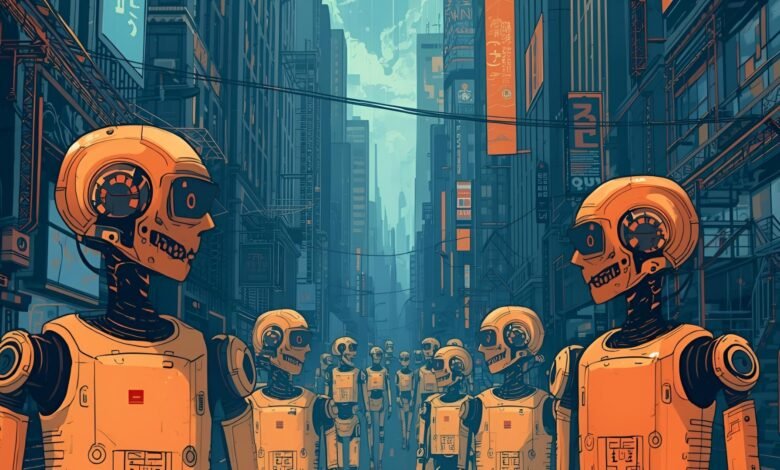
How AI is changing everyday life in 2025 represents one of the most significant technological transformations we’ve witnessed in recent years. Artificial intelligence applications have evolved from abstract concepts into practical tools that billions of people interact with daily, often without realizing the technology powering their experiences. Whether you’re checking your email, scrolling through social media, or receiving medical diagnostics, AI technologies are working behind the scenes to enhance efficiency, personalization, and decision-making.
The integration of AI in daily life has moved beyond corporate boardrooms and research laboratories into our homes, workplaces, healthcare facilities, and educational institutions. In 2025, we’re witnessing unprecedented momentum in AI adoption across industries, from generative AI models that write and create content to machine learning algorithms that predict health outcomes and optimize our schedules. This article explores fifteen compelling real-world examples that demonstrate how artificial intelligence is reshaping everyday routines and fundamentally changing the way we work, learn, communicate, and care for ourselves.
By examining these practical AI innovations in modern life, you’ll gain a clearer understanding of the technology’s reach and the tangible benefits it’s bringing to society. The transformation isn’t just about convenience—it’s about how AI is improving quality of life through smarter healthcare, more intuitive technology, and solutions to complex problems that previously seemed insurmountable. As we progress through 2025, understanding these applications helps us appreciate the magnitude of change and prepare for an increasingly AI-driven future that continues to evolve at a rapid pace.
1. Personalized Healthcare and Diagnostic Accuracy
How AI Diagnoses Medical Conditions
AI-powered healthcare has revolutionized the way medical professionals diagnose diseases, bringing unprecedented accuracy to medical AI applications. Machine learning algorithms can analyze medical imaging data, including CT scans, MRIs, and X-rays, with a precision that matches or exceeds human radiologists in many cases. Healthcare AI systems trained on millions of patient records can identify subtle patterns in imaging data that might escape the human eye, enabling earlier detection of conditions like cancer, cardiovascular disease, and neurological disorders.
In 2025, AI in medicine has become instrumental in improving diagnostic accuracy while reducing the time required for analysis from hours to mere minutes. Hospitals and diagnostic centers worldwide are implementing artificial intelligence solutions that flag potential abnormalities, allowing radiologists to prioritize their attention on the most critical cases. This technology doesn’t replace human expertise; rather, it augments physicians’ capabilities, creating a collaborative approach where AI technology handles initial analysis while doctors provide clinical judgment and patient interaction.
Wearable Technology and Health Monitoring
Artificial intelligence in healthcare extends to wearable devices that continuously monitor vital signs and predict health problems before they become critical. Smartwatches and fitness trackers equipped with advanced AI algorithms analyze heart rate variability, sleep patterns, physical activity levels, and other health metrics to provide personalized wellness recommendations. These AI-enabled wearables can detect irregular heart rhythms, predict potential strokes, and alert users to seek medical attention before emergencies occur.
Machine learning models trained on vast datasets can identify patterns unique to individual users, enabling early intervention and preventive care. In 2025, personalized medicine through AI has become more accessible to consumers, democratizing health monitoring that was previously available only in clinical settings. The combination of AI technology and wearable sensors creates a comprehensive health profile, enabling users to make informed decisions about their lifestyle, diet, and exercise routines. This shift toward preventive healthcare with AI has the potential to reduce hospitalizations, lower healthcare costs, and ultimately extend life expectancy.
2. Intelligent Virtual Assistants and Smart Homes

Voice-Activated AI Systems
AI virtual assistants have become ubiquitous in modern households, responding to voice commands and learning user preferences over time. These intelligent assistant technologies powered by natural language processing and machine learning can control smart home devices, answer questions, play music, schedule appointments, and provide real-time information. AI-powered assistants like Alexa, Siri, and Google Assistant have evolved significantly in 2025, now capable of understanding context, managing multi-step tasks, and even adjusting their responses based on previous interactions.


Voice-controlled AI systems have made technology more accessible to people of all ages and technical abilities, eliminating the need to navigate complex menus or remember specific commands. The artificial intelligence in smart homes extends beyond simple commands—these systems now anticipate user needs, adjust environmental controls automatically, and provide proactive suggestions based on daily patterns. AI automation in residential settings has created homes that are simultaneously more convenient and more energy-efficient, adapting to occupants’ preferences while reducing unnecessary power consumption.
Home Automation and Energy Management
Smart home AI integration goes beyond convenience, significantly impacting energy consumption and sustainability. Artificial intelligence algorithms learn household routines and adjust heating, cooling, lighting, and appliance usage to minimize energy waste while maintaining comfort. AI-driven home automation systems analyze weather forecasts, occupancy patterns, and historical usage data to optimize thermostat settings and predict when appliances should operate during off-peak hours. In 2025, machine learning in smart homes has enabled homeowners to reduce energy bills by fifteen to twenty-five percent while simultaneously decreasing their carbon footprint.
Intelligent home management systems can diagnose potential equipment failures before they occur, scheduling maintenance at optimal times and preventing costly emergency repairs. The integration of AI technology with renewable energy sources like solar panels creates sophisticated systems that maximize clean energy usage and minimize reliance on grid electricity during peak demand periods. This represents a fundamental shift toward sustainable living powered by AI, where homes actively participate in environmental conservation while providing superior comfort and convenience to inhabitants.
3. Advanced Content Creation and Generative AI
Writing and Content Generation
Generative AI has transformed content creation, enabling professionals and creatives to produce high-quality material exponentially faster. AI writing tools powered by large language models can draft blog posts, marketing copy, technical documentation, and creative content that captures specific tones and styles. Artificial intelligence for content creation reduces the time spent on initial drafting, allowing writers and marketers to focus on editing, refining, and strategic direction. In 2025, AI-powered writing assistants will have become indispensable in newsrooms, marketing agencies, and content studios worldwide.
Machine learning writing tools analyze successful content, learn what resonates with audiences, and provide suggestions for improving engagement and readability. These AI content generators don’t replace human creativity; instead, they amplify it by handling repetitive tasks and providing data-driven recommendations. AI assistance in content creation has democratized professional-grade writing tools, enabling small businesses and independent creators to compete with larger organizations. The ability to produce content at scale without proportionally increasing labor costs has allowed companies to maintain more consistent publishing schedules and test content variations for optimization.
Image and Video Generation
AI image generation and video creation with artificial intelligence have opened entirely new possibilities for creators. Generative AI models can produce photorealistic images, artistic renderings, and video content from text descriptions, code, or rough sketches. AI-powered design tools have enabled people without professional training to create professional-quality visuals, animations, and multimedia content.
In 2025, text-to-image AI capabilities have matured significantly, generating images with sophisticated details, accurate lighting, and appropriate compositions. Artificial intelligence video tools can edit raw footage, add effects, color-correct, and even generate synthetic actors or background elements. AI-generated media has revolutionized advertising, e-learning, entertainment, and architectural visualization industries.
However, this technological advancement has also raised important questions about authenticity, copyright, and ethical usage of AI-created content. Professional creators are learning to integrate these AI tools in creative workflows, using generative AI to handle technical aspects while maintaining artistic direction and final approval authority. The democratization of sophisticated creative tools through AI technology has empowered millions of people to bring their creative visions to life, regardless of technical expertise or financial resources.
4. Workplace Automation and Productivity Enhancement
Routine Task Automation
AI automation in the workplace has fundamentally transformed how employees spend their time, eliminating tedious, repetitive tasks that consume hours daily. Intelligent automation systems powered by machine learning can process invoices, manage email workflows, schedule meetings, and compile reports without human intervention.
Artificial intelligence automation has reduced data entry errors, improved record accuracy, and freed professionals to focus on strategic, creative, and interpersonal aspects of their work. In 2025, AI-powered workflow automation has become standard across industries, from finance and healthcare to retail and manufacturing. Robotic process automation and intelligent automation solutions handle complex, multi-step processes that previously required dozens of employees, dramatically improving efficiency while reducing operational costs.
Workplace AI systems analyze how employees spend their time and automatically identify additional processes ripe for automation, continuously optimizing organizational workflows. The shift toward AI-driven productivity hasn’t eliminated jobs; instead, it has transformed them, shifting human workers toward higher-value activities that require judgment, creativity, and emotional intelligence. Organizations that have successfully implemented AI workplace solutions report significant improvements in employee satisfaction, as workers spend less time on frustrating administrative tasks and more time on meaningful, challenging work that contributes to organizational success.
Intelligent Decision Support
AI decision-making tools have emerged as critical assets in enterprise environments, analyzing vast datasets to provide actionable insights and recommendations. Machine learning analytics examine historical performance data, market trends, competitor activities, and internal metrics to forecast outcomes and identify optimal strategies. Artificial intelligence for business enables executives and managers to make faster, more informed decisions supported by comprehensive data analysis.
AI-powered business intelligence systems consolidate information from disparate sources, identify correlations, and surface trends that humans might overlook. In 2025, predictive analytics with AI has become essential in industries ranging from retail to finance, where understanding future trends directly impacts profitability and competitiveness. Machine learning predictive models can forecast customer behavior, inventory needs, resource allocation, and potential risks with remarkable accuracy.
AI advisory systems provide recommendations with confidence levels and supporting evidence, enabling decision-makers to understand not just what action to take, but why the recommendation is sound. The integration of artificial intelligence in business operations has created organizations that operate with greater agility, respond faster to market changes, and make fewer costly mistakes. However, organizations continue to grapple with important questions about maintaining human oversight, preventing algorithmic bias, and ensuring that AI-driven decisions ultimately serve organizational and stakeholder interests.
5. Personalized Learning and Educational Technology
Adaptive Learning Systems
AI in education has transformed how students learn, with personalized learning systems adapting to individual pace, learning style, and knowledge gaps. Intelligent tutoring systems powered by machine learning algorithms assess student understanding in real-time and adjust content difficulty, presentation style, and practice problems accordingly. Educational AI platforms provide customized learning paths that accelerate progress for advanced learners while giving struggling students additional support without the stigma of public remediation. In 2025, AI-powered education has made high-quality tutoring accessible to students worldwide, regardless of socioeconomic background or geographic location.
Adaptive learning technology with artificial intelligence can identify specific areas where students struggle, suggest targeted interventions, and predict which students are at risk of falling behind. AI tutoring systems provide immediate feedback on assignments and exams, explaining errors and offering alternative approaches to problem-solving. The democratization of personalized education through AI has particular significance for students in developing countries and rural areas, where access to qualified educators has historically been limited. AI learning companions have made education more engaging by providing instant answers to questions, suggesting relevant resources, and maintaining motivation through personalized encouragement and achievement recognition.
Teacher Augmentation and Administrative Relief
AI in schools extends beyond direct student instruction to supporting teachers and reducing administrative burdens. Artificial intelligence tools can grade assignments, quizzes, and standardized tests, providing immediate feedback to students while freeing teachers to focus on higher-order instruction and individual student support. AI administrative tools handle scheduling, attendance tracking, progress reporting, and communication with families, reducing paperwork that consumes significant portions of teachers’ time. Machine learning analysis of student performance data helps teachers identify patterns, predict achievement gaps, and allocate resources effectively.
In 2025, AI-assisted teaching has made education more efficient, allowing teachers to serve more students effectively while maintaining personalized attention to individual needs. Educational analytics powered by AI provide insights into pedagogical effectiveness, helping educators refine their methods and adopt evidence-based practices. Rather than replacing teachers, artificial intelligence in education augments their capabilities, automating routine tasks while emphasizing the uniquely human aspects of education: mentorship, inspiration, emotional support, and modeling of critical thinking. This shift has the otential to improve teacher satisfaction and retention while improving student outcomes across diverse populations.
6. Financial Services and Fraud Prevention
Intelligent Financial Planning
AI in finance has revolutionized personal wealth management, making sophisticated financial planning accessible to individuals who cannot afford human financial advisors. Robo-advisors powered by machine learning analyze personal financial situations, risk tolerance, and long-term goals to recommend optimal investment strategies. Artificial intelligence financial tools automatically rebalance portfolios, optimize tax efficiency, and suggest adjustments based on life changes or market conditions. AI-driven financial management in 2025 provides real-time insights into spending patterns, identifies unnecessary expenses, and recommends ways to improve financial health. Machine learning algorithms analyze market trends and economic indicators to time investments strategically and minimize losses during market downturns.
Personalized financial advice from AI has reduced wealth management costs significantly, enabling middle-income individuals to access investment strategies previously available only to the wealthy. AI financial planning systems educate users about financial concepts, explain recommendations in understandable terms, and help build financial literacy, alongside providing recommendations. The accessibility of artificial intelligence in personal finance has contributed to improved financial outcomes and greater wealth accumulation among populations historically excluded from traditional wealth management services.
Fraud Detection and Risk Management
AI fraud detection systems have become essential safeguards protecting financial institutions and their customers from increasingly sophisticated criminal schemes. Machine learning algorithms analyze transaction patterns, identifying anomalies that deviate from normal behavior and flagging potential fraud before it occurs.
Artificial intelligence security systems examine thousands of data points—transaction location, amount, merchant category, time of day, and historical patterns—to assess fraud risk with remarkable accuracy. In 2025, AI-powered fraud prevention has reduced both external theft and internal fraud, saving financial institutions billions of dollars annually. Real-time AI monitoring catches fraudulent activities instantly, alerting customers and freezing accounts within seconds of suspicious activity detection.
Machine learning cybersecurity continuously adapts to new fraud tactics, learning from attempted breaches and updating detection algorithms to prevent future attacks. Predictive AI models identify customers at risk of account compromise and proactively implement additional security measures. AI-driven risk management in finance extends beyond fraud to credit assessment, loan default prediction, and market risk analysis. The sophistication of artificial intelligence in financial security has made personal accounts significantly safer than they were in pre-AI eras, while also reducing the false positive rate that previously resulted in legitimate transactions being declined.
7. Transportation and Autonomous Vehicles
Autonomous Driving Technology
Autonomous vehicles powered by AI represent one of the most anticipated applications of artificial intelligence technology, promising to transform transportation fundamentally. Self-driving cars use machine learning algorithms to process inputs from cameras, radar, lidar, and ultrasonic sensors, interpreting the driving environment and making split-second decisions. AAI-driven systems have logged millions of miles in testing, demonstrating safety records that rival or exceedthose of those of human drivers in many scenarios. In 2025, autonomous vehicle technology has progressed from research prototypes to commercial deployment in limited geographic areas and controlled conditions. Artificial intelligence in transportation promises to reduce traffic accidents (which are predominantly caused by human error), increase mobility for people unable to drive, and optimize traffic flow.
AI-powered autonomous systems can communicate with infrastructure and other vehicles, creating coordinated traffic networks that minimize congestion and reduce fuel consumption. Machine learning perception allows autonomous vehicles to recognize pedestrians, cyclists, and animals, anticipating their movements and responding appropriately. However, self-driving AI raises complex questions about responsibility, decision-making in unavoidable accidents, and job displacement for professional drivers. Autonomous vehicle development continues despite challenges, with companies investing billions in perfecting the technology and navigating regulatory frameworks necessary for safe deployment.
Intelligent Traffic Management
AI traffic optimization systems analyze real-time traffic data from millions of vehicles, sensors, and cameras to optimize traffic flow and reduce congestion. Machine learning algorithms predict traffic patterns, identify bottlenecks, and dynamically adjust signal timing to minimize delays. Artificial intelligence in transportation has reduced commute times, decreased emissions from vehicle idling, and improved overall traffic efficiency in cities worldwide. Predictive analytics with AI forecast traffic surges based on events, weather, and historical patterns, allowing transportation departments to implement proactive measures.
AI-powered traffic management communicates with autonomous and connected vehicles, providing real-time routing recommendations that distribute traffic evenly across available roads. In 2025, intelligent transportation systems have made rush hour somewhat less congested, enabled more reliable travel predictions, and enhanced public transportation efficiency. Machine learning transportation models identify optimal locations for new infrastructure, recommend timing for maintenance activities, and help cities plan for future growth.
8. Retail and E-commerce Transformation
Personalized Shopping Experiences
AI in e-commerce has completely transformed how consumers discover and purchase products online. Recommendation algorithms powered by machine learning analyze browsing history, purchase behavior, demographic information, and preferences of similar customers to suggest products that consumers are likely to want. Artificial intelligence personalization has increased conversion rates, average order values, and customer satisfaction by presenting relevant products at optimal times. AI shopping assistants understand natural language queries, helping customers find products even when they don’t know specific model numbers or technical specifications.
In 2025, AI-powered retail has created shopping experiences that feel personally curated despite the enormous selection available online. Machine learning personalization engines adapt website layouts, promotional messaging, and content recommendations based on individual user profiles and real-time behavior. Predictive recommendation systems anticipate needs before customers articulate them, suggesting products based on seasonal patterns, life events, and purchase history. Artificial intelligence in e-commerce has particularly benefited niche markets and underserved demographics, where insufficient inventory makes traditional retail unviable, but online platforms can cater to specialized interests.
Inventory Management and Supply Chain Optimization
AI supply chain management has revolutionized how retailers predict demand, manage inventory, and coordinate logistics. Machine learning demand forecasting analyzes historical sales data, seasonal trends, promotional calendars, and external factors (weather, economic indicators, social trends) to predict future demand with remarkable accuracy.
Artificial intelligence in inventory management reduces both overstock (which ties up capital and often results in markdowns) and stockouts (which result in lost sales and customer frustration). AI-powered supply chain systems optimize order timing, quantities, and routing to minimize costs while ensuring product availability. In 2025, intelligent supply chain optimization has enabled retailers to maintain lower inventory levels while actually improving product availability.
Machine learning logistics identify efficient routing for deliveries, coordinate with transportation providers, and optimize warehouse operations. AI predictive analytics for supply chain identify potential disruptions—supplier failures, transportation delays, natural disasters—and suggest mitigating actions. Artificial intelligence automation in warehouses has increased picking accuracy, accelerated fulfillment, and improved workplace safety. The integration of AI in retail operations has allowed companies to offer faster, more reliable shipping while simultaneously reducing operational costs and environmental impact.
9. Social Media and Content Curation

Algorithmic Content Recommendation
AI algorithms have become the primary gatekeepers of digital content, determining what billions of people see across social media, streaming platforms, and news sites. Machine learning recommendation systems analyze user engagement patterns, content interactions, and preferences to create personalized feeds that maximize engagement and time spent on the platform. Artificial intelligence content curation means that no two users experience the same social media or streaming service, each receiving algorithmically customized content. In 2025, AI-powered content discovery has made it easier to find entertainment and information aligned with personal interests while simultaneously raising concerns about echo chambers and algorithmic bias.
Machine learning engagement optimization suggests the most engaging content variations to creators, helping them understand what resonates with audiences. Predictive AI systems identify emerging trends before they become mainstream, helping content creators capitalize on opportunities early. However, the power of algorithm-driven content distribution raises important questions about manipulation, misinformation spread, and the psychological impact of algorithmically optimized content designed to maximize engagement rather than well-being.
Moderation and Content Safety
AI content moderation systems scan billions of posts, images, and videos daily, identifying policy violations, hate speech, and harmful content with remarkable speed. Machine learning moderation reduces the time between content posting and removal of policy-violating material, limiting exposure to harmful content. Artificial intelligence safety systems protect minors from adult content, predatory behavior, and exploitation. AI detection algorithms identify fake news, manipulated media, and coordinated inauthentic behavior that undermines trust in information ecosystems. In 2025, AI-powered content safety has created platforms that remain relatively free of illegal material and egregious violations despite hosting billions of pieces of content.
Machine learning pattern recognition identifies organized campaigns of abuse or coordinated harassment. Artificial intelligence content analysis has improved significantly, reducing both false positives (legitimate content mistakenly removed) and false negatives (policy violations missed). However, the scale and complexity of AI moderation mean that errors occur, and the opacity of algorithmic decision-making sometimes makes it unclear why content was removed or accounts suspended. Balancing AI automation for safety with maintaining human appeal processes and transparency remains an ongoing challenge for social platforms.
10. Healthcare Administration and Patient Experience
Appointment Scheduling and Patient Management
AI healthcare administration systems have streamlined the patient experience, from initial appointment scheduling through billing and follow-up care. Intelligent appointment scheduling systems powered by machine learning optimize clinician calendars, reducing wait times while maximizing clinic efficiency. AI-powered patient portals send appointment reminders, collect necessary medical history information, and process insurance authorization requests before patients arrive. Artificial intelligence in healthcare operations predicts no-shows, suggests optimal reschedule times, and automates communication with patients.
In 2025, AI-enhanced patient experience has reduced administrative burden on healthcare staff, allowing them to dedicate more attention to direct patient care. Machine learning patient journey optimization identifies bottlenecks in clinic workflows and recommends process improvements. Predictive AI analytics forecast appointment demand, helping clinics schedule appropriate staffing levels. AI-powered billing systems verify insurance coverage, identify billing errors before submission, and improve payment collection rates.
Personalized Treatment Plans
AI in clinical decision support helps physicians develop personalized treatment plans tailored to individual patient characteristics, genetic profiles, and disease history. Machine learning treatment algorithms analyze research literature, clinical trial data, and outcomes from similar patients to recommend evidence-based interventions. Artificial intelligence precision medicine moves beyond one-size-fits-all approaches toward customized therapies optimized for individual patients. Predictive analytics with AI forecast treatment responses, helping clinicians select interventions most likely to succeed for specific patients.
In 2025, AI-powered medical treatment will have enabled earlier interventions and improved outcomes through more targeted, efficient therapeutic approaches. Machine learning models identify patients at high risk of treatment complications, triggering preventive interventions. Artificial intelligence in healthcare supports the shift toward precision medicine, reducing trial-and-error treatment cycles that previously caused unnecessary suffering and healthcare costs.
11. Environmental Monitoring and Climate Action
Predictive Environmental Analytics
AI climate monitoring systems process vast amounts of environmental data from satellites, ground sensors, and weather stations to model climate patterns and predict future conditions. Machine learning environmental models help scientists understand climate dynamics, predict extreme weather events, and assess climate change impacts. Artificial intelligence in environmental science has accelerated research and improved modeling accuracy.
Predictive AI systems forecast natural disasters like hurricanes, floods, and wildfires days or weeks in advance, enabling evacuation and preparation. In 2025, AI-powered climate analysis has contributed to improved disaster preparedness and a better understanding of climate change. Machine learning models identify vulnerable areas and populations most likely to suffer climate impacts, focusing intervention and adaptation resources effectively. Artificial intelligence environmental planning helps cities and countries develop climate resilience strategies grounded in data-driven analysis.
Resource Optimization and Sustainability
AI in environmental management optimizes resource consumption, from agricultural water usage to industrial energy efficiency. Machine learning agricultural systems monitor soil conditions, weather patterns, and plant health, recommending irrigation schedules and intervention timing that minimize water usage while maintaining crop yields. Artificial intelligence farming has increased agricultural productivity while reducing environmental impact.
AI-powered industrial systems identify energy efficiency opportunities, optimize manufacturing processes, and reduce waste. In 2025, AI sustainability initiatives will have enabled significant reductions in resource consumption and environmental impact across industries. Predictive maintenance with AI prevents equipment failures that cause resource waste and environmental contamination. Machine learning resource management allocates resources efficiently, reducing waste and improving environmental stewardship.
12. Customer Service and Support Automation
Chatbots and Automated Support
AI chatbots have become the first line of customer support for most organizations, handling routine inquiries and directing complex issues to human representatives. Natural language processing enables AI support systems to understand customer questions, determine appropriate responses, and maintain conversational context across multiple exchanges. Artificial intelligence customer service resolves issues faster than human representatives for straightforward problems while freeing human staff to handle complex situations requiring judgment and empathy. Machine learning chatbots improve continuously, learning from successful interactions and adjusting responses based on outcomes.
In 2025, AI-powered customer support has significantly reduced wait times for basic inquiries and lowered customer service costs. Intelligent support systems are available 24/7, providing immediate assistance regardless of time zone or business hours. Artificial intelligence support automation has allowed customer service departments to maintain or improve service quality while reducing staffing needs. However, customers sometimes express frustration when AI chatbots misunderstand complex inquiries or when escalation to human support takes longer than anticipated. The most effective customer service AI systems know their limitations and quickly escalate to human representatives when appropriate.
Predictive Customer Support
AI predictive support systems identify customers experiencing issues before they contact the company, proactively reaching out with solutions. Machine learning customer analysis identifies patterns indicating dissatisfaction, technical problems, or service interruptions, triggering proactive support interventions. Artificial intelligence customer retention systems identify customers at risk of switching to competitors and recommend retention offers or service improvements.
Predictive analytics with AI helps companies understand customer needs and pain points, informing product development and service improvements. In 2025, AI-driven customer care has shifted from reactive (responding to problems after customers report them) to proactive (addressing issues before customers become aware of them). Machine learning customer insights provide businesses with a comprehensive understanding of customer satisfaction drivers and areas for improvement. AI customer experience optimization has become a competitive differentiator, with companies using these capabilities to exceed customer expectations and build loyalty.
13. Cybersecurity and Threat Detection
Real-time Threat Identification
AI cybersecurity systems monitor network traffic, system logs, and user behavior in real-time, identifying potential security threats with remarkable speed. Machine learning threat detection recognizes attack patterns that humans might miss, identifying sophisticated breaches that attempt to evade traditional security measures. Artificial intelligence security monitoring establishes baselines of normal network activity, automatically flagging deviations that could indicate compromise.
Predictive analytics with AI identify vulnerable systems and users before attackers find them, enabling proactive security hardening. In 2025, AI-powered cybersecurity has reduced the time between breach initiation and detection from weeks or months to minutes. Machine learning attack detection recognizes previously unknown attack types by identifying suspicious patterns rather than matching against databases of known threats. Intelligent threat response systems automatically contain breaches, disconnect compromised systems, and preserve forensic evidence for analysis.
Vulnerability Management and Prevention
AI vulnerability management systems identify security weaknesses in networks, applications, and systems before attackers can exploit them. Machine learning patch management automatically applies security updates and prioritizes critical vulnerabilities requiring urgent attention. Artificial intelligence security assessment continuously audits systems for compliance with security standards and identifies policy violations. Predictive AI models anticipate emerging threat vectors and recommend preventive measures.
In 2025, AI-enhanced cybersecurity has reduced successful breaches and minimized damage when breaches occur. Machine learning user behavior analysis identifies insider threats and compromised accounts through the detection of anomalous activity patterns. Artificial intelligence security automation has allowed security teams to protect increasingly large and complex infrastructures despite limited staffing. However, as cybersecurity AI becomes more sophisticated, attackers simultaneously develop AI-powered attacks, creating an ongoing arms race between defensive and offensive capabilities.
14. Language Translation and Communication
Real-time Translation Services
AI translation technology has broken down language barriers, enabling real-time communication between people speaking different languages. Machine learning translation models trained on billions of translated documents provide translations that capture not just literal meaning but nuance, context, and intent. Artificial intelligence language services have progressed from clunky, literal translations to natural-sounding renderings that convey original meaning effectively. Neural machine translation continuously improves through exposure to more examples and feedback on translation quality. In 2025, AI-powered translation has made global communication faster and more accessible.
Real-time translation features in video calls, messaging apps, and meetings enable seamless communication across language boundaries. Machine learning language understanding enables more accurate translation of idioms, slang, and cultural references. Artificial intelligence multilingual communication has facilitated international business, cross-cultural education, and personal connections that were previously complicated by language differences. AI language accessibility has particularly benefited people with hearing disabilities through real-time captioning and speech recognition, and people with visual disabilities through AI-powered text-to-speech systems. The democratization of translation through AI has reduced the cost of global communication and expanded opportunities for international collaboration.
Accessibility and Inclusive Communication
AI accessibility technology has made digital content and communication available to people with disabilities, creating more inclusive digital environments. Machine learning speech recognition enables accurate voice control for people unable to use keyboards or mice due to motor disabilities. Artificial intelligence text-to-speech provides natural-sounding narration for written content, benefiting people with vision impairments. AI language processing enables communication for people with speech disabilities, translating specialized communication methods into natural language. Predictive AI systems anticipate user needs, reducing the number of steps required to accomplish common tasks for people with limited mobility. In 2025, AI-powered accessibility has removed many digital barriers, making websites, applications, and devices usable by people with diverse abilities. Machine learning personalization allows individuals to customize interface elements, interaction methods, and information presentation according to their specific needs and preferences. Artificial intelligence assistive technology has empowered people with disabilities to participate more fully in education, employment, and social participation.
15. Research and Scientific Discovery
Accelerated Drug Development
AI in pharmaceutical research has dramatically accelerated drug discovery, reducing development timelines from years to months. Machine learning molecular analysis identifies promising drug candidates by analyzing billions of molecular structures and predicting therapeutic efficacy and safety profiles. Artificial intelligence drug design generates novel compounds with desired properties, dramatically expanding the space of potential medicines scientists can investigate. Predictive AI models forecast clinical trial outcomes based on molecular properties and patient characteristics, improving the success rate of clinical trials. In 2025, AI-powered drug discovery has contributed to the development of treatments for previously intractable diseases. Machine learning protein folding prediction (exemplified by systems like AlphaFold) has revolutionized structural biology, enabling rational drug design and understanding of disease mechanisms. Artificial intelligence clinical trial optimization identifies ideal patient populations for specific drugs, improving trial efficiency and trial participant outcomes. AI pharmaceutical research has reduced the cost of drug development, potentially making medicines more accessible globally. However, questions remain about ensuring equitable access to AI-discovered drugs and addressing intellectual property issues related to AI-generated innovations.
Data Analysis in Physics and Astronomy
AI in physics research processes enormous datasets from particle accelerators, telescopes, and other instruments, identifying patterns and making discoveries that would be impossible for humans to find manually. Machine learning analysis of astronomical data has discovered exoplanets, gravitational waves, and other phenomena, expanding our understanding of the universe. Artificial intelligence in scientific research has accelerated progress in understanding fundamental physics, materials science, and other fields.
Predictive AI models suggest experiments likely to yield interesting results, optimizing research productivity. In 2025, AI-powered scientific discovery has contributed to breakthroughs in multiple disciplines. Machine learning data analysis identifies correlations in massive datasets that humans might overlook. Artificial intelligence pattern recognition detects subtle signals in noisy data, extracting meaning from previously incomprehensible datasets. AI-assisted research has democratized data analysis capabilities, allowing smaller research groups to extract insights from complex datasets previously requiring specialized expertise and enormous computational resources.
Also Read: How IoT Technology is Reshaping Healthcare, Retail, and More
Conclusion
The transformation of AI Is Changing Everyday life by artificial intelligence in 2025 demonstrates the profound impact this technology has achieved across virtually every domain of human activity. From healthcare AI diagnosing diseases with unprecedented accuracy to intelligent home automation optimizing our living spaces, from personalized education adapting to individual learning needs to autonomous vehicles promising safer transportation, these fifteen examples represent only a fraction of how AI-powered innovation is reshaping daily existence. Artificial intelligence applications have moved beyond theoretical possibilities into practical tools that billions of people depend on for work, health, education, and entertainment.
The integration of machine learning and AI technology into everyday life has created opportunities for efficiency gains, improved decision-making, and solutions to problems previously considered insurmountable. However, this transformation also raises important considerations about privacy, employment, bias, and the ethical use of artificial intelligence. As we progress through 2025 and beyond, understanding how AI Is Changing Everyday enables individuals and societies to harness the benefits while thoughtfully addressing challenges. The future promises even more sophisticated applications of artificial intelligence, but that future will be shaped significantly bythe decisions we make